Popular Now









If you’ve ever installed Rust, spawned on a beach with nothing but a rock and a torch, then died before figuring out where to find wood, you’re not alone. Almost every long-time Rust player has a story like that. The difference is that some people quit after the first hour, while others eventually discover why this game has kept them hooked for thousands of hours.
Rust has one of the highest dropout rates among popular survival games, but not because it’s unfair. It feels unfair at first because the game rarely explains what went wrong. New players often assume they’re simply bad at PvP, when the real problem is that they’re trying to solve the wrong challenge.
The first lesson in Rust isn’t about shooting better. It’s about understanding how the game thinks.
If you’re still wondering whether Rust is simply too difficult or whether you’re making the same mistakes as everyone else, reading What Is Rust? Everything Beginners Should Know first provides useful context. Many frustrations start long before your first gunfight.
Why Rust Feels So Brutal for New Players
Rust is designed to overwhelm you.
That isn’t poor game design. It’s the foundation of the experience.
Many survival games gradually introduce mechanics. Minecraft gives you a peaceful first day if you move quickly. Valheim eases players into exploration before throwing dangerous biomes at them.
Rust does the opposite.
Within minutes, you may encounter hunger, cold weather, wildlife, radiation zones, armed players, hostile clans, and someone with two thousand hours who finds entertainment in chasing fresh spawns with a spear.
The game never pauses to explain priorities.
That’s why beginners often believe everything is equally important.
Should you build a house?
Should you craft clothes?
Should you collect stone?
Should you fight for loot?
The experienced player already knows the answer depends entirely on the situation. A beginner doesn’t even know the question they should be asking.
One memory still stands out after hundreds of hours. During an early wipe, three new players built a large wooden base less than a minute away from Outpost because it “looked safe.” They spent almost an hour gathering resources, proudly upgraded a few walls, then logged off.
The next morning, the base was completely gone.
Their conclusion?
“Rust players are toxic.”
The actual lesson was different. They had unknowingly built beside one of the busiest traffic routes on the server. Hundreds of geared players passed that area every day. Their base wasn’t unlucky. It was practically an invitation.
That kind of mistake is incredibly common because Rust doesn’t teach map awareness. Players learn through failure.
The biggest misunderstanding about Rust is believing it’s a shooter with survival mechanics.
It’s actually a knowledge game disguised as a shooter.
The players who survive longest aren’t always the ones with the best aim. They’re the ones who recognize patterns before danger appears.
Why New Players Give Up So Quickly
Most beginners don’t quit after one big disaster.
They quit after dozens of small disappointments that slowly convince them they’re making no progress.
| Beginner Experience | What the Player Thinks | What an Experienced Player Understands |
|---|---|---|
| Dying repeatedly | “Everyone is better than me.” | Spawn locations are temporary. Survival matters more than fighting. |
| Losing starter resources | “I’m wasting my time.” | Early resources are replaceable within minutes. |
| Getting raided | “Everything is gone.” | Every base is temporary, especially during early wipes. |
| Running out of food | “The game is impossible.” | Food becomes trivial after learning reliable routes. |
| Losing every fight | “I can’t aim.” | Most fights are decided before the first shot through positioning and preparation. |
Table 1. Why beginners often misread what Rust is trying to teach.
Note: The emotional reaction is understandable, but the underlying lesson is usually different from what new players assume.
The emotional gap between expectation and reality is what pushes people toward uninstalling. Once that gap closes, Rust becomes dramatically more enjoyable.
Mistake #1: Fighting Before Learning How to Survive
The quickest way to ruin your first few hours is trying to prove yourself.
Most new players see another naked survivor running across the beach and immediately think about combat.
Veterans usually think about something else entirely.
“How much cloth do I have?”
That sounds boring until you realize cloth can become a sleeping bag, bandages, clothing, or a bow. Those items keep you alive far longer than winning a random fistfight against another player carrying almost nothing.
Rust constantly rewards restraint.
One habit separates experienced players from beginners: they don’t fight every battle simply because they can.
Early combat rarely provides meaningful rewards.
Winning might give you another rock, a torch, or a handful of mushrooms. Losing means starting over from the beach.
That’s a terrible trade.
A much smarter opening strategy looks like this:
- Collect enough hemp for a sleeping bag.
- Secure basic food and water.
- Gather enough wood and stone for starter tools.
- Avoid unnecessary fights until you’ve established a safe respawn.
It sounds less exciting than chasing every player you see, but it’s how experienced survivors quietly build momentum while others keep respawning.
One wipe illustrated this perfectly.
A friend insisted on fighting every player near spawn. After forty minutes, he had three kills, zero base, almost no resources, and eventually lost everything to someone carrying a bow.
Another teammate ignored every fight, farmed quietly along the edge of the map, recycled a few components, and already had a stone base before sunset.
Neither player had better mechanical skill.
One simply understood Rust’s priorities.
That’s why Rust Beginner’s Guide (2026): Everything You Need to Survive focuses heavily on early progression rather than combat. Surviving the first hour matters far more than winning the first duel.
If you’re still struggling during those opening minutes, Rust Beginner Tips That Will Keep You Alive covers dozens of practical habits that dramatically reduce unnecessary deaths.
The first victory in Rust isn’t killing another player.
It’s reaching the point where dying no longer destroys your progress.
Mistake #2: Building a Base Too Early
Building a base quickly feels productive.
Ironically, it’s one of the easiest ways to waste an hour.
Many beginners pick the first empty piece of land they see because they’re afraid of losing resources. That decision feels logical in the moment, but it ignores one of Rust’s most important concepts:
Location determines survival.
A mediocre base in a smart location usually outperforms an impressive base built in the wrong place.
Experienced players often spend more time scouting than constructing.
They look for several things before placing a foundation.
- Nearby monuments for scrap farming.
- Reliable trees and stone nodes.
- Water access when possible.
- Moderate player traffic instead of constant action.
- Natural terrain that limits visibility.
Beginners rarely evaluate any of those factors.
They simply stop running.
That’s why so many starter bases end up beside roads, monuments, or popular travel routes where geared players pass every few minutes.
Another common mistake is overbuilding immediately.
A two-story wooden fortress looks impressive, but it also advertises that someone inside probably has resources worth stealing.
Small, efficient bases attract far less attention during the chaotic opening day of a wipe.
One of the smartest solo players encountered over several wipes consistently built tiny, almost forgettable bases hidden near rocky terrain. They looked so unimportant that most players ignored them entirely.
Meanwhile, enormous compounds nearby disappeared after the first night.
Rust quietly teaches a lesson that applies well beyond the game itself.
Visibility creates risk.
Sometimes the safest strategy isn’t looking powerful.
It’s looking uninteresting.
Choosing the right location matters far more than adding another floor or another airlock. That’s why Best Place to Build a Base in Rust should be one of the first guides every beginner reads.
Once you’ve found a strong location, Rust Building Guide for New Players explains how experienced players think about layouts, expansion, and long-term progression instead of simply stacking walls wherever space allows.
If you need practical designs that balance cost, defense, and simplicity, Best Rust Starter Base Designs offers reliable options that don’t require advanced building techniques.
Your first base doesn’t need to survive an entire wipe.
It only needs to survive long enough to help you learn what actually matters.
Mistake #3: Farming Without a Goal
New players usually believe farming is the safest activity in Rust.
In reality, farming without a clear objective is one of the fastest ways to waste time.
The problem isn’t gathering resources. The problem is gathering the wrong resources.
It’s easy to spend thirty minutes hitting every stone node, chopping every tree, and picking up every barrel you see, only to realize you still can’t craft what you actually need. That feeling creates the illusion that Rust has an unbearably slow progression system.
It doesn’t.
Most experienced players simply farm with a shopping list in mind.
Before leaving the base, they already know exactly why they’re going out.
Maybe they need 300 scrap for Workbench Level 2.
Maybe they’re looking for enough cloth to replace sleeping bags after an expected raid.
Maybe they only need metal fragments to upgrade doors before logging off.
Every trip has a purpose.
That mindset changes everything because every minute spent outside your base carries risk. The longer you wander without direction, the greater the chance another player finds you first.
One mistake seen repeatedly on fresh wipes is beginners filling their inventory with low-value items while ignoring the resources that actually accelerate progression. They’ll happily carry several stacks of stone but walk past sewing kits, road signs, or electrical components because they don’t recognize their value yet.
Hours later, they’re wondering why everyone else already has firearms.
The answer usually isn’t “better aim.”
It’s better decision-making.
A simple rule helps enormously:
Ask yourself one question before leaving your base.
“What am I coming back with?”
If you don’t have an answer, you’re probably just wandering.
The difference becomes obvious after a few wipes.
Instead of thinking, “I’m going farming,” experienced players think:
- I’m farming scrap.
- I’m farming cloth.
- I’m farming sulfur.
- I’m farming metal.
- I’m farming components for blueprints.
That tiny change in mindset dramatically improves progression.
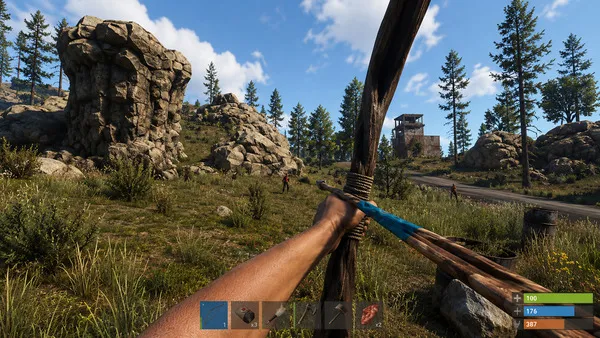
If you’re still unsure which monuments and routes provide the fastest early-game economy, Rust Scrap Farming Guide explains why experienced players rarely collect resources randomly.
Likewise, Rust Components Guide helps identify which seemingly useless junk should always be picked up because it fuels nearly every stage of progression.
The goal isn’t collecting everything.
The goal is collecting what moves your account forward.
Mistake #4: Thinking PvP Is Everything
Many players install Rust after watching highlight videos filled with incredible gunfights.
Those clips are entertaining, but they also create one of the biggest misconceptions about the game.
Rust is not a constant PvP simulator.
The best players often avoid fights they don’t need to take.
That sounds strange until you’ve played long enough to realize every bullet has a cost.
A risky fight might earn you an assault rifle.
It might also erase three hours of farming.
Experienced players constantly calculate whether a fight is worth taking.
New players rarely do.
One memorable example happened during a monthly wipe.
A solo player carrying a full inventory of components spotted another survivor looting a gas station. The obvious move seemed to be attacking.
Instead, he quietly turned around and went home.
Later that evening, those components became a Tier 2 Workbench and several essential blueprints.
Had he taken the fight, there was a good chance both players would have died to a third party hiding nearby.
That decision looked boring.
It was also the winning play.
This is one of the hardest lessons for FPS veterans.
In games like Counter-Strike or Call of Duty, winning fights is the primary objective.
In Rust, surviving is the objective.
Combat is simply one possible tool.
Before taking any fight, experienced players usually consider several factors.
- What am I carrying?
- How much will I lose?
- Do I know where my opponent’s teammates are?
- Can another squad hear these shots?
- Is this fight actually necessary?
Those questions often matter more than raw aim.
That’s why players with average mechanical skill frequently outperform gifted shooters who treat every encounter as a duel.
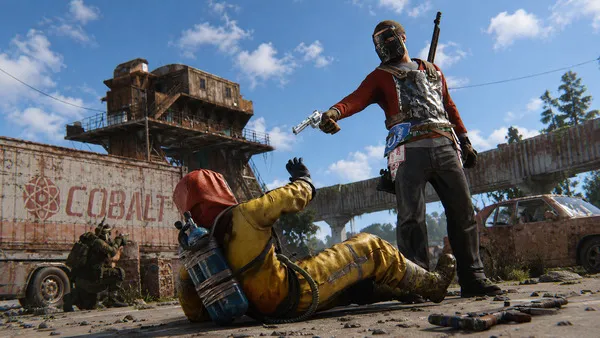
If improving your combat mechanics is your priority, Rust PvP Guide breaks down positioning, movement, and engagement choices that have a much bigger impact than simply practicing recoil.
Once you’re comfortable with the fundamentals, How to Win More Gunfights in Rust explores the small habits that consistently separate surviving players from dead ones.
Winning every fight isn’t realistic.
Winning the fights that actually matter is.
Mistake #5: Joining the Wrong Server
One of the least discussed reasons beginners quit Rust has nothing to do with gameplay.
They’re simply playing on the wrong server.
Rust offers an enormous variety of servers, yet many newcomers click the first official server with hundreds of players because they assume that’s the intended experience.
For some people, it’s the worst possible choice.
Imagine learning chess by sitting across from a grandmaster.
That’s essentially what happens when a brand-new player joins an overcrowded official server filled with veterans who understand every monument, every farming route, and every raid strategy.
Losing repeatedly under those conditions doesn’t teach much.
It mostly creates frustration.
Different server types create completely different experiences.
| Server Type | Best For | Difficulty | Typical Experience |
|---|---|---|---|
| Official High Population | Experienced players | Very High | Constant PvP, frequent raids, fierce competition |
| Official Low Population | Returning players | High | Slower progression with occasional PvP |
| Solo Only | Beginners | Moderate | Fairer fights and fewer large clans |
| Duo or Trio | Friends learning together | Moderate | Balanced progression and teamwork |
| Community Modded | Casual players | Low to Moderate | Faster gathering and less punishment |
Table 2. Choosing the right server can completely change your first impression of Rust.
The mistake isn’t joining an official server.
The mistake is assuming every Rust server delivers the same experience.
Many players who claim they “hate Rust” would probably enjoy it far more on a low-population solo community server where they actually have room to learn.
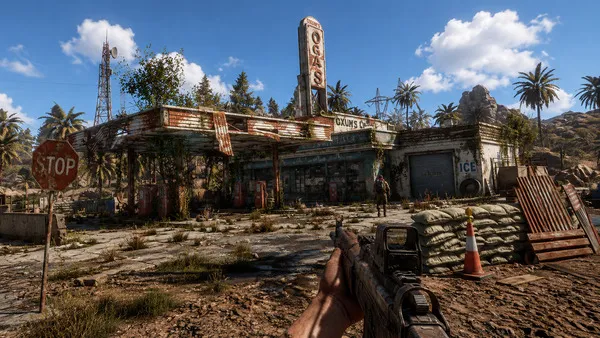
That’s exactly why Best Rust Servers in 2026 compares popular server options instead of recommending the busiest ones by default.
If you’re unsure which environment matches your playstyle, Rust Server Types Explained (Solo, Duo, Trio & Clan) breaks down the strengths and weaknesses of each format.
Choosing the right server won’t make Rust easier.
It simply gives you a fair chance to learn.
Mistake #6: Losing Everything to an Offline Raid
Nothing convinces a beginner to uninstall Rust faster than logging in after work and finding an empty patch of land where their base used to stand.
Everyone remembers their first offline raid.
Not because they lost loot.
Because they lost time.
For new players, a base represents progress.
Every wall was mined by hand.
Every furnace required another trip outside.
Every upgrade felt earned.
When all of it disappears overnight, it feels personal.
Veteran players eventually develop a different perspective.
Bases are temporary.
Knowledge isn’t.
That mental shift is one of the biggest differences between someone with twenty hours and someone with two thousand.
After enough wipes, you stop measuring success by how long a base survives.
Instead, you measure it by how efficiently you rebuilt after disaster.
Offline raids still hurt.
They simply stop ending the story.
There are practical ways to reduce the risk.
- Avoid building beside popular monuments.
- Upgrade critical doors before expanding.
- Keep backup supplies in hidden stashes.
- Don’t advertise wealth with oversized compounds.
- Expect every base to be raided eventually.
Notice that none of those suggestions promise complete safety.
Rust doesn’t work that way.
The goal isn’t becoming impossible to raid.
The goal is making your base an unattractive target compared to everyone else’s.
If defending your base is becoming your biggest challenge, Rust Offline Raid Defense Guide explains how experienced builders slow raiders down without wasting unnecessary resources.
You should also read Base Design Mistakes That Invite Raiders, because many successful raids happen long before the first explosive is crafted. They begin with poor planning during construction.
Accepting that every base has an expiration date changes how you play.
Ironically, that’s often the moment Rust becomes much less stressful.
Rust Doesn’t Reward Skill First. It Rewards Knowledge.
If there’s one lesson almost every veteran eventually learns, it’s this:
Rust is far less about mechanical skill than most people think.
That sounds strange because YouTube is full of incredible recoil control, clutch raids, and impossible 1v4 highlights. Those moments certainly exist, but they represent the top one percent of gameplay.
Most players don’t lose because they missed a shot.
They lose because they made a bad decision five minutes earlier.
A new player might blame poor aim after getting killed near Airfield.
An experienced player asks a completely different question.
“Why was I carrying 400 scrap through one of the busiest monuments on the map without checking for nearby players?”
The death wasn’t caused by inaccurate shooting.
It started with poor planning.
That’s why two players with identical aim can have completely different experiences. One constantly restarts from the beach, while the other quietly upgrades to a Tier 3 Workbench every wipe.
Knowledge compounds.
Every wipe teaches lessons that carry into the next one.
You begin recognizing which roads are usually crowded, when monuments become dangerous, how players rotate across the map, and why certain bases almost never survive the weekend.
Eventually, survival becomes predictable.
The game hasn’t become easier.
You’ve simply stopped making beginner decisions.
This is also why watching experienced creators often feels confusing. They appear fearless, but most of their confidence comes from information, not reflexes.
They already know where danger is likely to appear before anyone fires a shot.
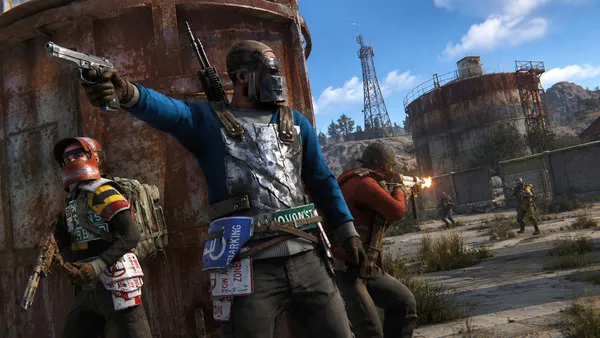
If you want to accelerate that learning process instead of discovering everything through painful trial and error, How Veteran Rust Players Progress So Quickly explains the habits and priorities that consistently separate experienced survivors from everyone else.
The Turning Point Every Rust Player Experiences
Almost everyone has a moment where Rust suddenly makes sense.
There isn’t a cutscene.
There isn’t an achievement.
You simply notice something has changed.
One day, spawning on the beach no longer feels stressful.
You instinctively collect hemp while moving.
You recognize nearby monuments without opening the map.
You already know where you’d like to build before crafting your first hatchet.
When another player appears on the horizon, panic is replaced with evaluation.
Do they see me?
What are they carrying?
Is this fight worth taking?
Can I simply avoid them?
Those questions happen automatically.
That’s when Rust transforms from frustrating into fascinating.
Many players describe this as finally “understanding” Rust.
It’s less like mastering a difficult shooter and more like learning a new language. At first everything feels random. Then patterns begin appearing everywhere.
Suddenly you understand why veterans recycle at specific monuments.
Why they leave dangerous areas before sunset.
Why they never carry more loot than necessary.
Why they happily walk away from fights that seem free.
That knowledge creates confidence.
Not arrogance.
Confidence.
Looking back, one of the clearest signs of improvement isn’t surviving more often.
It’s realizing how many unnecessary risks you used to take without even noticing.
Every experienced Rust player was once the person sprinting across open fields with a full inventory because “it’ll probably be fine.”
It usually wasn’t.
If you’re reaching the stage where wipes feel less chaotic and you’re ready to plan longer-term progression, Rust Wipe Guide explains how experienced players approach different stages of a wipe instead of treating every day the same.
Should You Quit Rust?
Probably not.
At least, not because your first few hours were miserable.
Those difficult opening sessions don’t mean Rust isn’t for you.
They simply mean you’re experiencing the game the same way almost everyone else did.
That said, Rust isn’t designed for every type of player.
If your favorite games reward constant progress, permanent upgrades, and relaxing exploration, Rust can feel exhausting.
Everything is temporary.
Bases disappear.
Weapons are lost.
Entire wipes eventually reset.
Some players genuinely dislike that cycle, and there’s nothing wrong with that.
On the other hand, if you enjoy solving problems, adapting under pressure, and gradually becoming more efficient than everyone around you, Rust offers something very few multiplayer games can match.
The satisfaction doesn’t come from unlocking stronger gear.
It comes from becoming a smarter player.
That’s a subtle but important difference.
Before deciding whether Rust is worth your time, ask yourself why you’re frustrated.
If your answer is:
“I keep dying.”
That’s normal.
“I don’t know what I should be doing.”
That’s normal too.
“I feel like everyone else knows something I don’t.”
That’s probably true.
The good news is that knowledge is exactly what improves the fastest.
Mechanical skill can take months to develop.
Learning better decision-making often takes only a few wipes.
Conclusion
The biggest reason beginners quit Rust isn’t because the game is impossibly difficult.
It’s because they misunderstand what success looks like.
New players measure success by winning fights, building giant bases, or surviving every encounter.
Veterans measure success differently.
They value efficient progression.
Smart decisions.
Good positioning.
Knowing when to leave.
Knowing when to fight.
And perhaps most importantly, knowing that every wipe eventually ends anyway.
Once that perspective changes, losing gear stops feeling like failure.
It simply becomes part of the story.
Rust doesn’t expect perfection.
It expects adaptation.
The players who stay aren’t necessarily the fastest shooters or the most aggressive raiders.
They’re usually the ones willing to learn from every mistake instead of treating every death as proof they’re bad at the game.
Ironically, many of today’s most experienced Rust players nearly uninstalled the game during their first weekend.
The difference wasn’t talent.
It was persistence.
Frequently Asked Questions
Why do so many beginners quit Rust?
Most beginners quit because they feel like they’re making no progress. Constant deaths, losing loot, and a lack of clear guidance create frustration before they understand how Rust’s progression system actually works.
Is Rust harder than other survival games?
Yes. Rust offers very little protection for new players and combines survival mechanics with unpredictable PvP, making its learning curve steeper than games like Minecraft or Valheim.
Does aim matter more than strategy in Rust?
No. While good aim helps, decision-making, positioning, map knowledge, and resource management usually have a greater impact on long-term survival.
What’s the best server for new Rust players?
Low-population Solo or Duo community servers are usually the best choice because they provide more opportunities to learn without constant pressure from large clans.
Why do experienced players avoid unnecessary fights?
Because every fight carries risk. Even if you win, another player may hear the gunfire and eliminate you afterward. Smart players only fight when the reward outweighs the potential loss.
Why do veteran players seem to progress so quickly?
They already know efficient farming routes, monument priorities, crafting order, and safe building locations. Their advantage comes from accumulated knowledge rather than superior reflexes.
Why do offline raids make beginners quit?
Offline raids erase hours of visible progress. Beginners often view their base as permanent, while experienced players treat every base as temporary and focus on rebuilding efficiently.
Is Rust actually a PvP game?
PvP is an important part of Rust, but survival, planning, and resource management are equally important. Many successful players spend more time avoiding bad fights than seeking good ones.
Can beginners enjoy Rust without joining a clan?
Yes. Many solo players enjoy Rust by choosing appropriate servers, building modest bases, and focusing on efficient progression instead of direct confrontation.
How long does it take for Rust to become enjoyable?
For many players, Rust becomes significantly more enjoyable after 20–50 hours, when basic survival decisions become instinctive and progression starts feeling consistent.
What’s the single biggest mistake new Rust players make?
The biggest mistake is treating every encounter as a fight instead of asking whether the fight is worth taking in the first place.
Should you keep playing Rust if you’re constantly dying?
Yes, provided you’re learning something from each death. Improvement in Rust comes from understanding why you died, not simply spending more hours in the game.
What Rust Actually Teaches That Most Survival Games Don’t
One of the biggest misconceptions about Rust is that it’s a game about winning.
It isn’t.
Rust is a game about recovering.
That’s an important distinction.
In most multiplayer games, a bad match ends after twenty or thirty minutes. You queue again and start fresh.
Rust doesn’t work that way.
A single mistake can erase an entire weekend of farming. Your carefully designed base disappears overnight. Your best weapons end up in someone else’s inventory. Weeks of blueprints vanish when a wipe arrives.
On paper, that sounds incredibly frustrating.
Oddly enough, it’s exactly why long-time players keep coming back.
Rust forces players to become emotionally detached from temporary progress.
The first time your base gets raided, it feels devastating.
The fifth time, you rebuild faster.
The tenth time, you’re already planning your next location before logging out.
That mindset rarely appears in highlight videos, but it’s one of the biggest reasons veteran players enjoy Rust differently than beginners.
They’re no longer trying to protect every item.
They’re trying to make better decisions than they made yesterday.
Once you understand that philosophy, almost every system in Rust starts making sense.
The Players Who Last Aren’t Always the Most Talented
After enough wipes, one pattern becomes impossible to ignore.
The players who disappear after a few days usually have one thing in common.
They expect Rust to reward effort.
The players who stay understand that Rust rewards adaptation instead.
That’s why someone with only a few hundred hours can outperform another player who technically spends more time online.
Hours alone don’t create experience.
Reflection does.
Veteran players constantly ask questions after every death.
- Why was I there?
- Why did I bring that much loot?
- Could I have avoided the fight?
- What information did I miss?
- Would I make the same decision again?
Beginners often ask a completely different question.
“How did he kill me so fast?”
One question produces improvement.
The other usually produces frustration.
This difference explains why two players with similar playtime can develop at completely different speeds.
Rust quietly rewards curiosity.
If You’re About to Quit Rust, Try This First
If you’ve reached the point where every session feels frustrating, don’t immediately uninstall the game.
Instead, change your objective.
For your next wipe, ignore progression completely.
Don’t worry about reaching Tier 3.
Don’t compare yourself with clans.
Don’t try to dominate the server.
Give yourself one simple goal.
Learn one new thing.
Maybe it’s understanding how monuments connect.
Maybe it’s learning a safer farming route.
Maybe it’s building a stronger starter base.
Maybe it’s surviving your first night without dying.
Those small victories create momentum.
Momentum eventually creates confidence.
Confidence creates better decisions.
Before long, you’ll realize something interesting.
The situations that once felt impossible now feel routine.
That’s exactly how experienced Rust players are made.
Not through perfect aim.
Not through expensive gear.
Through hundreds of tiny lessons that slowly change the way they think.
Final Verdict
So, why do beginners quit Rust so fast?
Because they mistake temporary failure for permanent inability.
Rust doesn’t tell you that you’re improving.
There’s no level-up animation when you finally learn to choose a safer building location.
There’s no achievement for recognizing an ambush before it happens.
There’s no trophy for deciding not to take a fight that would probably end badly.
Those improvements happen quietly.
Yet they’re the moments that transform someone from a frustrated beginner into a confident survivor.
If you’re still struggling, that’s not unusual.
Almost every veteran remembers those first painful hours far more vividly than their first successful raid.
The difference is simple.
They stayed long enough to realize Rust wasn’t trying to teach them how to shoot.
It was teaching them how to think.
Continue Learning
If this article sounds familiar, the next step isn’t playing longer—it’s learning smarter. These guides naturally build on the ideas covered here:
- Rust Beginner’s Guide (2026): Everything You Need to Survive for a complete roadmap from your first spawn to late-game progression.
- Best Rust Servers in 2026 to find a server that matches your experience level instead of throwing yourself into the most competitive environment.
- Rust Wipe Guide to understand how player behavior changes throughout a wipe and why timing often matters more than equipment.
- How Veteran Rust Players Progress So Quickly if you want to understand the habits that experienced players develop after hundreds or even thousands of hours.
Those guides won’t stop you from dying.
They will help ensure every death teaches you something useful, which is ultimately the fastest way to enjoy Rust.