Popular Now










The first 30 hours in Sea of Thieves aren’t about becoming rich, unlocking Pirate Legend, or winning every naval battle. They’re about building habits that will make your next 300 hours dramatically more enjoyable. If you focus on learning the right systems in the right order, you’ll reach the mid-game faster, waste less time, and avoid the mistakes that cause many new pirates to lose interest after their first weekend.
Most progression guides explain every mechanic in the game.
This roadmap explains something much more useful:
What deserves your attention first—and what can safely wait.
After hundreds of hours sailing every type of ship, playing solo, joining random crews, and introducing friends to the game, one pattern keeps repeating. The players who stay with Sea of Thieves aren’t necessarily better at combat. They simply understand what to prioritize.
That’s exactly what this roadmap is designed to teach.
What should your first 30 hours in Sea of Thieves actually look like?
Your first 30 hours should gradually shift from learning mechanics to building efficient routines. During the first five hours, focus on basic sailing and completing Voyages. Between hours five and fifteen, improve your gold income, learn Trading Companies, and understand the Emissary system. By hour twenty, you should be comfortable tackling tougher activities, and by hour thirty, you’ll be preparing for long-term progression instead of wondering what to do next.
Many new players believe progression is measured by how much gold they own.
Veteran players usually measure it differently.
Can you dock without crashing?
Can you recognize islands without checking the map every thirty seconds?
Can you escape another crew when you need to?
Can you finish a Voyage efficiently?
Those milestones matter far more than your bank account.
If you’ve just started playing, begin with What Should You Do First in Sea of Thieves? A Day-One Roadmap before continuing. That guide covers the critical decisions during your first session, while this article focuses on everything that happens afterward.
Why Most Players Stop Progressing After Their First Weekend
The biggest progression problem isn’t difficulty.
It’s direction.
Most players don’t quit because Sea of Thieves becomes too hard. They quit because every login starts feeling the same.
Log in.
Grab a Voyage.
Find treasure.
Sell treasure.
Repeat.
After a few sessions, that routine starts feeling repetitive, even though the game actually contains dozens of progression systems waiting to be explored.
The problem is that the game rarely tells you when to move on to the next one.
That’s why some players spend thirty hours digging treasure for Gold Hoarders without ever trying an Emissary Flag.
Others ignore World Events because they assume they’re only for expert crews.
Some never buy their own ship because they don’t understand what Captaincy actually changes.
None of those players are playing incorrectly.
They’re simply missing a roadmap.
One memory still stands out from introducing a friend to the game. Around the ten-hour mark, he insisted he’d already seen everything.
We hadn’t touched Skeleton Forts.
We hadn’t sailed as Emissaries.
We hadn’t tried Sea Forts.
He’d never boarded another ship.
He’d never experienced a Fort of Fortune.
He’d never even noticed that different Trading Companies completely change how you approach the world.
The issue wasn’t lack of content.
It was lack of progression.
Good sandbox games quietly expand.
Bad progression makes them feel smaller.
Once you understand how Sea of Thieves layers its systems, every few hours unlock another reason to keep sailing.
Your Progression Philosophy Matters More Than Your Gold
The fastest way to slow your progress is constantly asking:
“What’s the fastest way to make money?”
A much better question is:
“What skill should I learn next?”
That’s because skills compound.
Gold doesn’t.
Learning how to angle sails saves time every voyage.
Recognizing island silhouettes reduces unnecessary navigation.
Understanding wind direction makes escaping hostile crews much easier.
Knowing when to fight and when to leave protects every future treasure haul.
Those advantages never disappear.
Think about two pirates with twenty hours played.
The first earned 500,000 gold by following optimized farming videos but still crashes into islands, forgets supplies, and panics whenever another ship appears.
The second earned half as much gold but confidently handles storms, finishes Voyages efficiently, and knows exactly which objectives to prioritize.
Which player reaches Pirate Legend with less frustration?
Almost always the second one.
Progression in Sea of Thieves isn’t linear.
It’s cumulative.
Every skill you master quietly improves everything that comes after it.
That’s why this roadmap measures success differently.
Instead of chasing impressive numbers, aim to leave every session slightly more capable than when you logged in.
Gold naturally follows.
Your First Five Hours Should Build Confidence, Not Wealth
During your first five hours, your objective isn’t becoming efficient.
It’s becoming comfortable.
Trying to optimize everything immediately often creates the opposite result. New players jump into World Events too early, chase experienced crews across the map, or spend half an evening comparing cosmetics instead of actually learning the game.
The better approach is surprisingly simple.
Build confidence first.
Everything else becomes easier afterward.
The first milestone should look something like this.
| Time Played | Main Objective | What You Should Learn | Success Indicator |
|---|---|---|---|
| Hour 1 | Complete the Maiden Voyage | Core ship controls and basic mechanics | You can sail, repair, and dock without confusion |
| Hour 2 | Finish your first Voyage | The basic progression loop | You understand how Trading Companies work |
| Hour 3 | Complete another Voyage | Navigation and treasure management | You spend less time checking the map |
| Hour 4 | Practice resource management | Food, cannonballs, planks, and inventory | Preparing for a voyage becomes automatic |
| Hour 5 | Explore naturally | Confidence and decision-making | You always know what to do next |
Table 1. Recommended progression goals for your first five hours in Sea of Thieves.
Note: These milestones are flexible. Some players reach them faster, others slower. What matters is mastering each step before moving to more advanced activities.
One habit that consistently separates confident beginners from frustrated ones is refusing to rush.
There’s a strange pressure in modern games to optimize every minute. Video titles promise millions of gold, instant progression, and secret routes that supposedly skip hours of grinding.
That mindset doesn’t fit Sea of Thieves very well.
This game rewards familiarity.
The first time you approach an Outpost, docking feels stressful.
Ten hours later, you’re parking without thinking.
The first storm feels chaotic.
Later, it’s simply another obstacle to navigate.
The first Skeleton Ship encounter feels impossible.
Eventually, it’s just another source of loot.
Those improvements happen naturally if your first few hours are spent building fundamentals instead of chasing shortcuts.
If you’re still working through these early milestones, Sea of Thieves Beginner Guide explains the essential mechanics in greater detail, while What Should You Do First in Sea of Thieves? A Day-One Roadmap offers a more detailed walkthrough for your opening session.
What You Should Ignore During Your First Five Hours
Knowing what not to do is often just as valuable as knowing what to do.
Every experienced pirate can look back and laugh at the distractions that consumed their first weekend. Looking impressive, chasing rare loot, and sailing halfway across the map for every glowing cloud all seemed like great ideas at the time.
Most of them weren’t.
For your first five hours, these activities can safely wait:
- World Events that attract multiple crews.
- Hourglass PvP battles.
- Expensive cosmetic shopping.
- Farming multiple Trading Companies simultaneously.
- Watching complicated gold farming routes designed for veteran crews.
- Constantly switching ships because another activity looks more exciting.
None of those systems are going anywhere.
In fact, they’ll be much more enjoyable once you’ve built a stronger foundation.
A good progression roadmap isn’t about doing more.
It’s about doing the right things at the right time.
By the end of Hour Five, you shouldn’t feel like you’ve mastered Sea of Thieves.
You should feel like the sea finally makes sense.
That’s the point where real progression begins.
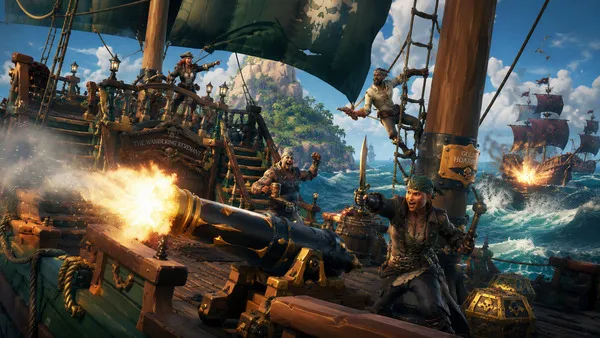
Hours 5–10: Stop Playing Like a Tourist and Start Building a Routine
Between Hour Five and Hour Ten, your goal should shift from understanding the game to repeating successful habits. This is where Sea of Thieves quietly rewards consistency. Players who establish a reliable gameplay loop here usually progress much faster than those constantly chasing whatever catches their eye on the horizon.
This is the point where many pirates make an expensive mistake.
Every glowing cloud looks important.
Every Skeleton Fort feels like an opportunity.
Every Reaper Chest seems impossible to ignore.
The sea suddenly feels full of things you could do, and that’s exactly why many players stop making meaningful progress.
Experienced crews rarely sail without a reason.
They leave the Outpost already knowing what today’s objective is.
That small difference changes everything.
Instead of wandering from island to island hoping something interesting happens, begin every session with a simple plan.
For example:
- Raise a Gold Hoarders Emissary Flag.
- Finish three Voyages.
- Sell everything before Grade V.
- Restock supplies.
- Log out.
Nothing about that plan sounds particularly exciting.
That’s exactly why it works.
Consistency generates far more progress than randomness.
One crew I’ve sailed with had an unofficial rule: “Never leave an Outpost without knowing why you’re sailing.”
It sounds obvious, but that mindset eliminated hours of indecision over hundreds of play sessions.
Your First Trading Company Should Become Your Specialty
Trying to level every Trading Company at once slows progression far more than most players realize. During Hours Five through Ten, it’s usually better to specialize before expanding.
That doesn’t mean ignoring every other faction forever.
It simply means giving yourself enough time to understand how one progression path actually works.
For most players, Gold Hoarders remains the strongest choice.
The Voyages naturally teach navigation.
Treasure maps encourage island recognition.
Selling loot becomes second nature.
Most importantly, the objectives are predictable enough that you can focus on improving your sailing instead of constantly reading quest descriptions.
Players who enjoy combat might naturally lean toward Order of Souls.
Those who enjoy logistics and efficient routing often discover that Merchant Alliance becomes much more enjoyable than its reputation suggests.
Here’s a practical comparison.
| Trading Company | Difficulty | Best For | Skill Developed |
|---|---|---|---|
| Gold Hoarders | Easy | New players | Navigation and exploration |
| Order of Souls | Medium | Combat-focused players | PvE combat awareness |
| Merchant Alliance | Medium | Planning-oriented players | Route optimization and inventory management |
Table 2. Choosing the best Trading Company during your first ten hours.
Note: This isn’t a permanent decision. The goal is simply to develop mastery in one gameplay loop before adding more systems.
If you’re still deciding which faction fits your playstyle, Trading Companies Guide explains how each progression path changes your long-term experience rather than simply comparing rewards.
Hours 10–15: Learn Efficiency Before You Chase Profit
By the time you reach ten hours, you probably feel comfortable sailing.
That’s good.
Now it’s time to stop wasting time.
This stage isn’t about making dramatically more gold overnight.
It’s about quietly removing the small inefficiencies that steal twenty or thirty minutes from every session.
Think about everything that happens before your first Voyage even begins.
Buying supplies.
Searching barrels.
Organizing food.
Checking quests.
Planning your route.
Choosing an Outpost.
Most beginners perform every one of those tasks separately.
Veteran crews combine them into one smooth routine that takes only a few minutes.
Efficiency in Sea of Thieves rarely comes from moving faster.
It comes from thinking ahead.
A simple example illustrates the difference.
Imagine two sloops completing exactly the same Gold Hoarders Voyage.
Crew A sails directly to each island without checking the next destination.
Crew B studies the entire map first, notices two islands are close together, collects extra supplies along the way, and sells treasure at the nearest Outpost instead of retracing their route.
Both crews finish the Voyage.
One simply arrives back at the Outpost much sooner.
Those saved minutes eventually become entire evenings.
The Emissary System Is the First Major Progression Multiplier
If there’s one mechanic that dramatically changes your progression after the ten-hour mark, it’s the Emissary system.
Many new players avoid raising an Emissary Flag because they worry about attracting hostile crews.
That’s a reasonable concern.
It’s also the reason many players unintentionally slow their own progression.
The Emissary system isn’t just a bonus.
It’s the game’s way of rewarding players who commit to an activity instead of constantly switching objectives.
Think of it as momentum.
Every Voyage makes the next one more valuable.
Every completed objective increases your reward.
Every decision feels connected.
Without an Emissary Flag, your session often feels like individual missions.
With one raised, the entire evening becomes a single progression chain.
That subtle psychological difference makes longer sessions feel surprisingly satisfying.
Of course, there are risks.
A Grade V Emissary is worth protecting.
Sometimes you’ll decide to sell early because another ship has appeared on the horizon.
Sometimes you’ll lose everything.
That’s part of learning risk management, and learning risk management is progression too.
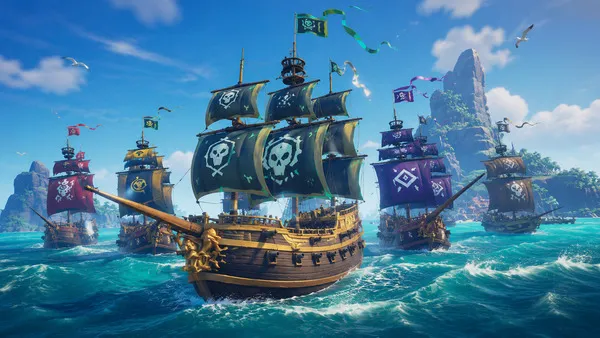
If you’ve reached the point where standard Voyages feel routine, How the Emissary System Works is probably the next guide worth reading. Pair it with Best Gold-Making Activities Ranked by Profit Per Hour, and you’ll start understanding why experienced crews often earn dramatically more gold without appearing to work any harder.
What Good Players Learn Between Hour 10 and Hour 15
This stage is where visible progression starts slowing down.
Ironically, invisible progression accelerates.
Gold income improves gradually.
Skill improves rapidly.
By now, experienced players usually begin developing instincts that can’t be unlocked through reputation levels.
They start predicting wind direction before adjusting sails.
They recognize island silhouettes from surprisingly long distances.
They hear distant cannon fire and immediately estimate how far another crew might be.
They notice a Reaper ship moving across the map and instinctively adjust their own route.
None of those abilities appear on any progression screen.
They’re earned through repetition.
The first time someone successfully harpoons loot while the ship keeps moving, it feels like a clever trick.
After twenty hours, it becomes automatic.
The first successful sword lunge onto another ship feels lucky.
Later, it feels routine.
This is why experienced pirates often appear much stronger than new players despite using exactly the same weapons and ships.
The equipment never changed.
Their habits did.
By the end of Hour Fifteen, you shouldn’t just have more treasure.
You should have fewer moments where you stop and wonder what to do next.
That’s a much stronger indicator that your progression is heading in the right direction.
Hours 15–20: Start Playing the Content You Used to Avoid
The biggest sign you’ve outgrown the beginner stage isn’t your reputation level.
It’s your confidence.
Around the fifteen-hour mark, activities that once looked intimidating suddenly become realistic.
Skeleton Forts no longer feel impossible.
Sea Forts become efficient farming routes instead of dangerous landmarks.
Skeleton Fleets start looking like opportunities instead of warnings.
This is exactly when many players discover how much content they’ve been sailing past for weeks.
A useful way to think about this stage is that you’re no longer learning how the world works.
You’re learning how to take advantage of it.
World Events are the perfect example.
Early on, they’re distractions.
Now they become calculated decisions.
Can your crew handle the fight?
How many other ships are nearby?
Is the reward worth the risk?
Those are questions experienced crews constantly ask.
Very few answer them the same way every session.
That’s one reason Sea of Thieves stays interesting for hundreds of hours.
The sea changes.
Your priorities change with it.
If World Events still feel unpredictable, How World Events Work explains which activities are worth prioritizing, while Skeleton Fort Guide breaks down one of the best introductions to high-value cooperative content.
By Hour Twenty, you shouldn’t feel like a beginner who’s survived long enough.
You should feel like a pirate making deliberate choices.
That distinction is where meaningful progression truly begins.
Hours 20–25: Start Investing in Systems That Keep Paying You Back
Once you’ve reached twenty hours, your priority should no longer be earning today’s gold. It should be unlocking systems that improve every future session.
This is where Sea of Thieves quietly shifts from a sandbox into a long-term progression game.
Many players never notice that transition.
They keep repeating the same Voyages because those are familiar, while ignoring mechanics that permanently improve the experience.
One of the best examples is Captaincy.
Buying your own ship doesn’t suddenly make combat easier or double your gold income. Instead, it removes dozens of tiny inconveniences that gradually add up over hundreds of hours.
You start caring about your ship.
You customize it.
You build milestones around it.
You begin thinking less like someone borrowing a vessel and more like a pirate building a career.
That psychological shift matters more than most progression guides acknowledge.
After unlocking Captaincy, many sessions naturally become longer because every voyage contributes toward persistent milestones instead of disappearing when you log off.
It’s one of those upgrades that doesn’t feel essential until you’ve played without it again.
If you’re approaching this point, Is Captaincy Worth Unlocking? explains exactly what changes and why experienced players consider it one of the biggest quality-of-life upgrades in the game.
Stop Measuring Progress by Gold Alone
Around the twenty-hour mark, gold starts becoming a misleading statistic.
It still matters.
It just isn’t the best indicator anymore.
Two players can end the evening with exactly the same amount of gold while having completely different levels of progression.
One might have spent four hours grinding the safest Voyages available.
The other learned how to survive contested World Events, escaped a Reaper Galleon, practiced boarding enemy ships, and discovered a faster sailing route between regions.
Only one of those players became significantly better.
This is why experienced crews rarely ask each other how much gold they earned.
Instead, conversations sound more like this:
“We finally cleared that Fleet without sinking.”
“We managed to steal a Fort of Fortune.”
“We escaped three Reapers with an Emissary Grade V.”
Those stories represent progression.
Gold is simply the reward attached to them.
The biggest breakthrough for many players happens when they stop asking whether an activity is the fastest way to make money and start asking whether it teaches something valuable.
That change in mindset keeps Sea of Thieves engaging long after cosmetic unlocks lose their novelty.
Hours 25–30: Prepare for the Game Beyond the Beginner Experience
By Hour Twenty-Five, you’ve already passed the point where most casual players stop.
Now the focus shifts toward preparing for everything that comes next.
This doesn’t necessarily mean rushing toward Pirate Legend.
It means making sure you’re building the habits that naturally lead there.
A healthy routine usually includes rotating between different Trading Companies, experimenting with higher-value activities, and gradually increasing the amount of risk you’re willing to accept.
One evening might revolve around Gold Hoarders.
The next might focus on Order of Souls.
Another could be dedicated entirely to World Events or helping newer friends learn the game.
Variety becomes part of progression.
That’s something newer players often misunderstand.
They assume experienced pirates always choose the activity with the highest profit.
In reality, many veterans choose whatever sounds the most enjoyable because they already understand every progression system feeds into the same long-term journey.
This is also a great time to begin thinking about Pirate Legend without obsessing over reaching it as quickly as possible.
Ironically, the players who constantly chase Pirate Legend often enjoy the game less than those who simply let it happen naturally.
If Pirate Legend is becoming your next milestone, Pirate Legend Guide explains what actually changes after reaching it, while What to Do After Becoming Pirate Legend helps avoid another common plateau many players experience.
Progress Milestones You Should Reach by Hour 30
A useful roadmap measures more than reputation levels.
It measures confidence.
If you’ve followed a balanced progression path, your account should look something like this by the end of your first thirty hours.
| Hours Played | Recommended Milestone | Why It Matters |
|---|---|---|
| 5 | Comfortable sailing a Sloop | Basic ship handling becomes automatic |
| 10 | Regularly completing Voyages | Reliable gold and reputation growth |
| 15 | Using an Emissary Flag confidently | Better rewards with manageable risk |
| 20 | Completing World Events | Learning high-value cooperative content |
| 25 | Unlocking or planning Captaincy | Long-term account progression |
| 30 | Preparing for Pirate Legend | Understanding every major progression system |
Table 3. Healthy progression milestones for your first thirty hours.
Note: These aren’t strict requirements. They’re practical indicators that you’re learning the game’s systems at a sustainable pace rather than rushing through them.
One detail worth mentioning is that none of these milestones mention a specific amount of gold.
That’s intentional.
Gold comes and goes.
Knowledge stays with you.
Skills Every Player Should Have by Hour 30
Reaching Hour Thirty should feel less like unlocking a new level and more like becoming a noticeably better pirate.
The difference becomes obvious during ordinary gameplay.
You no longer hesitate before docking.
You instinctively angle sails based on wind direction.
You recognize dangerous situations before they become disasters.
Perhaps most importantly, you recover from mistakes instead of panicking.
By this stage, these skills should feel reasonably comfortable:
| Skill | Why It Matters | Typical Beginner Mistake |
|---|---|---|
| Docking efficiently | Saves time every session | Dropping anchor too late |
| Sail management | Faster travel | Ignoring wind direction |
| Resource management | Longer survival | Leaving Outposts underprepared |
| Naval combat | Better confidence during encounters | Firing randomly without positioning |
| Boarding awareness | PvP improvement | Boarding without a plan |
| Escape decision-making | Protecting valuable loot | Fighting battles that aren’t worth winning |
Table 4. Core gameplay skills that matter more than reputation levels.
Note: Mastery isn’t required after thirty hours. Competence is enough to unlock far more enjoyable experiences later.
One of the funniest milestones in Sea of Thieves is realizing you’ve stopped looking at the map every thirty seconds.
You simply know where you’re going.
That moment usually arrives without fanfare.
It just quietly happens after enough time at sea.
The Mistakes That Quietly Slow Down Your Progress
The biggest progression killers aren’t dramatic failures.
They’re small habits repeated every session.
Some players insist on fighting every ship they see, even when carrying valuable loot.
Others avoid PvP completely and never learn how to defend themselves.
Some spend hundreds of thousands of gold on cosmetics before investing in systems that improve gameplay.
Others constantly switch objectives halfway through a session because another cloud appears on the horizon.
None of these mistakes are catastrophic on their own.
Together, they waste dozens of hours.
The most common progression traps include:
- Sailing without a clear objective.
- Ignoring supply collection before leaving an Outpost.
- Chasing every World Event regardless of circumstances.
- Farming only one activity because it’s familiar.
- Buying cosmetics instead of useful upgrades.
- Refusing to learn from sunk ships and failed voyages.
The last point deserves special attention.
Every experienced pirate has stories about disastrous sessions.
Entire Forts stolen at the last second.
Grade V Emissary flags lost minutes before selling.
Hours of treasure disappearing beneath the waves.
Those experiences aren’t interruptions to progression.
They are progression.
Most of the lessons that genuinely improve your gameplay come immediately after something goes spectacularly wrong.
That’s why 15 Beginner Mistakes That Cost You Thousands of Gold is worth revisiting every few weeks. It’s surprising how many “beginner mistakes” quietly follow players well into their first hundred hours.
By the end of your first thirty hours, you shouldn’t feel like you’ve seen everything Sea of Thieves has to offer.
You should feel like you’ve finally earned the confidence to explore the parts of the game that once seemed intimidating.
That’s the moment where the real adventure begins.
Frequently Asked Questions
Is 30 hours enough to understand Sea of Thieves?
Yes, thirty hours is enough to understand the core systems, but not enough to master them.
By this point, you should feel comfortable sailing, completing Voyages, using the Emissary system, participating in World Events, and handling most PvE encounters. You’ll also begin recognizing when another crew is dangerous before the first cannonball is fired.
What you won’t have yet is instinct.
Veteran players don’t react faster because they have better equipment. They react faster because they’ve seen the same situations hundreds of times. Thirty hours gives you knowledge. Hundreds of hours turn that knowledge into intuition.
Should I buy my own ship before reaching Pirate Legend?
Yes, if you plan on playing regularly.
Captaincy isn’t an endgame reward disguised as an early purchase. It’s a long-term quality-of-life investment.
Persistent ship customization, Captain’s Voyages, milestone tracking, and faster session setup all save time over hundreds of hours.
Many players delay buying their own ship because they’re focused on cosmetics.
Ironically, Captaincy usually contributes more to long-term enjoyment than another expensive jacket or ship figurehead.
For a deeper breakdown of every benefit, Is Captaincy Worth Unlocking? explains which players should prioritize it and which can safely wait.
Which Trading Company should I level first?
Gold Hoarders remains the easiest recommendation for most new players.
Its Voyages naturally teach navigation, island recognition, and efficient treasure collection while introducing the game’s basic progression loop.
That doesn’t mean it’s objectively the best.
Players who enjoy combat often progress faster with Order of Souls because they’re motivated by the gameplay rather than the rewards.
Merchant Alliance also becomes surprisingly enjoyable once route planning starts clicking.
The important part isn’t choosing the “perfect” faction.
It’s staying focused long enough to understand one progression path before trying to level everything simultaneously.
Does losing treasure mean you’ve wasted your time?
Not unless you learned nothing.
Every experienced pirate remembers losing an enormous haul.
Entire evenings disappear because of one boarding attempt.
A careless anchor turn.
A forgotten hole below deck.
A Reaper ship appearing at exactly the wrong moment.
Those losses feel painful at the time, but they’re usually remembered far longer than ordinary successful Voyages.
Most players become significantly better immediately after a major defeat.
Treasure is temporary.
Experience isn’t.
What’s the biggest mistake players make after their first ten hours?
Most players confuse familiarity with progression.
Once they’re comfortable completing one type of Voyage, they continue repeating it because it’s predictable.
Weeks later, they’re still wondering why progression feels slow.
The game expects you to expand.
Different Trading Companies.
World Events.
Emissary Flags.
Sea Forts.
Skeleton Fleets.
Captaincy.
The sea becomes much richer once those systems start overlapping.
If every session looks identical, you’re probably ready to leave your comfort zone.
Why do experienced players seem to earn so much more gold?
Because they waste less time, not because they grind harder.
Watch a veteran crew for an evening.
They’re already discussing the next island before leaving the current one.
Someone is collecting supplies while another checks the map.
Harpoons are used continuously.
Treasure is organized before arriving at an Outpost.
Small efficiencies stack together until a four-hour session contains an extra hour of actual gameplay.
That’s why Best Gold-Making Activities Ranked by Profit Per Hour only tells part of the story.
Execution matters more than the activity itself.
Should solo players follow a different progression roadmap?
The overall roadmap stays surprisingly similar.
The biggest difference is pacing.
Solo players naturally become better sailors because every task falls on one person. They learn multitasking earlier, become more aware of surrounding ships, and usually develop stronger survival instincts.
Crew players often progress faster economically but may rely on teammates for navigation or ship management.
Neither approach is objectively better.
Many experienced pirates recommend spending at least a few sessions solo because it strengthens every fundamental skill.
Is PvP necessary to progress efficiently?
No.
But understanding PvP absolutely is.
You don’t need to actively hunt other ships to enjoy Sea of Thieves.
You do need enough combat knowledge to recognize dangerous situations, defend your loot, and escape when necessary.
Some of the strongest crews rarely initiate fights.
They’re simply prepared when fights come to them.
Learning defensive naval combat provides far more long-term value than endlessly chasing every ship on the horizon.
How do I know when I’m ready for World Events?
A simple test works surprisingly well.
If your crew can comfortably finish ordinary Voyages without sinking, consistently maintain supplies, and recover from unexpected problems, you’re probably ready.
Success isn’t measured by whether you complete every World Event.
It’s measured by whether you’re learning something every attempt.
The first Skeleton Fort usually feels chaotic.
The fifth feels organized.
That’s progression.
Why do some players reach Pirate Legend quickly but still struggle?
Because reputation levels don’t automatically create skill.
Some players optimize every minute around reputation farming.
Others naturally build stronger mechanics while exploring the world.
Eventually those paths intersect.
That’s why you’ll occasionally meet Pirate Legends who still struggle with naval positioning while another player with lower reputation handles difficult fights effortlessly.
Titles unlock content.
Skills unlock confidence.
The second one lasts longer.
What’s the best long-term mindset for enjoying Sea of Thieves?
Treat every session as an opportunity to improve one habit.
Maybe today you practice faster docking.
Tomorrow you focus on naval positioning.
Another evening becomes all about boarding.
Those improvements seem insignificant individually.
Months later, they’re the reason ordinary gameplay feels effortless.
Players chasing only gold often burn out.
Players chasing mastery rarely run out of reasons to sail.
If I only remember one thing from this roadmap, what should it be?
Progression in Sea of Thieves isn’t about unlocking bigger numbers.
It’s about removing uncertainty.
At the beginning, everything feels unpredictable.
You wonder where to sail.
How to fight.
When to sell.
Whether another ship is dangerous.
Thirty hours later, many of those questions disappear.
You’re making decisions instead of guesses.
That’s the real milestone.
Everything else, including gold, reputation, cosmetics, and eventually Pirate Legend, naturally grows from there.
Final Thoughts
The first thirty hours of Sea of Thieves shape every hour that follows.
Players who rush through them often spend the next hundred hours correcting bad habits. Players who take the time to build solid fundamentals usually discover that progression feels almost effortless.
One lesson has stayed consistent across countless sessions.
The pirates who enjoy the game the longest aren’t the ones with the rarest cosmetics or the largest piles of gold.
They’re the ones who always seem to have another story to tell.
One night they narrowly escaped a Reaper Galleon through heavy fog.
Another evening they accidentally stole a Fort of Fortune while two larger crews fought each other.
Sometimes the entire adventure revolves around helping a brand-new pirate survive their first Kraken encounter.
Those stories don’t appear because someone followed the fastest leveling guide.
They happen because the player understood enough of the game’s systems to create opportunities instead of simply reacting to them.
If you’ve reached the end of this roadmap, you’re already ahead of many new players. You now have a clearer picture of what deserves your attention during those crucial first thirty hours and, just as importantly, what can safely wait.
As your confidence grows, continue building your knowledge with What Should You Do First in Sea of Thieves? A Day-One Roadmap, Sea of Thieves Beginner Guide, Best Gold-Making Activities Ranked by Profit Per Hour, How the Emissary System Works, and 15 Beginner Mistakes That Cost You Thousands of Gold. Together, those guides create a complete progression path from your first voyage to the moment Pirate Legend becomes an inevitable milestone rather than a distant dream.
The sea never really gets easier.
You simply become the kind of pirate who knows exactly what to do when the waves start getting rough.