Popular Now









Getting started in Sea of Thieves feels a little like being handed the keys to a real ship with no sailing experience. The game doesn’t point you toward a linear campaign, a list of mandatory quests, or an obvious progression path. Instead, it drops you into a beautiful open sea and quietly says, “Good luck.”
That freedom is one of the reasons people fall in love with the game. It’s also the reason many new pirates uninstall it after only a few hours.
After spending hundreds of hours sailing alone, crewing with friends, surviving PvP ambushes, and making just about every rookie mistake imaginable, one thing became obvious: the first day matters more than almost any other point in your adventure. A good first session teaches you how the world works. A bad one usually ends with a sunken ship, empty pockets, and the feeling that everyone else somehow understands rules you never learned.
The good news is that your first day doesn’t need to be about becoming rich or defeating experienced crews. It should simply give you a foundation that makes everything else easier.
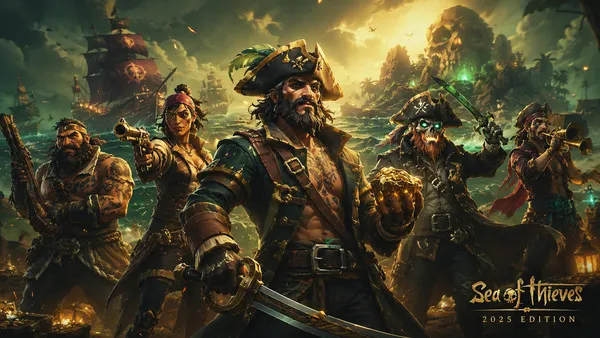
What should you do first in Sea of Thieves?
If you’re playing Sea of Thieves for the first time, your priorities should be learning the basic sailing mechanics, completing the Maiden Voyage, finishing a few beginner Voyages for a single Trading Company, understanding how progression works, and resisting the temptation to chase every activity on the map.
Many beginners think they’re falling behind because they aren’t earning thousands of gold in their first hour. That’s not how Sea of Thieves works. Gold is easy to earn later. Knowledge isn’t.
The players who progress the fastest aren’t necessarily the ones who fight every ship they see. They’re the ones who spend their first few hours learning how the sandbox fits together.
By the end of your first session, you should be able to answer these questions confidently:
- How do I control my ship?
- Where do I get Voyages?
- Which Trading Company am I leveling?
- What should I ignore for now?
- What’s my goal the next time I log in?
Once you can answer those, you’re already ahead of many players who wandered aimlessly through their first weekend.
Your first-day roadmap at a glance
Before diving into each step, here’s the roadmap that consistently gives new players the smoothest start.
| Time Played | Primary Goal | Why It Matters |
|---|---|---|
| First 20 minutes | Complete the Maiden Voyage | Learn every essential mechanic without pressure |
| 20–45 minutes | Sail your ship around a nearby island | Build confidence with steering, sails, and anchoring |
| First hour | Join one Trading Company | Start meaningful progression instead of random exploration |
| First two hours | Finish your first Voyage | Understand the game’s core gameplay loop |
| End of your session | Earn your first gold, reputation, and confidence | Set yourself up for faster progression tomorrow |
Table 1. Recommended first-day progression in Sea of Thieves.
Note: This isn’t a speedrun route. It’s designed to reduce confusion and build solid habits that continue paying off dozens of hours later.
If you’re completely new to Rare’s pirate sandbox, it’s worth reading our Sea of Thieves Beginner Guide after this roadmap. It explains the larger progression systems in more detail, while this article focuses only on what deserves your attention during those critical opening hours.
Finish the Maiden Voyage before doing anything else
The first thing every new player should do is complete the Maiden Voyage.
Yes, even if you’re eager to jump into the shared world immediately.
Many experienced players skip recommending it because they’ve forgotten what it’s like to be new. After hundreds of hours, steering a ship or raising sails becomes muscle memory. On Day One, none of that feels natural.
The Maiden Voyage quietly teaches nearly every skill you’ll use later:
- Steering and turning your ship
- Raising, lowering, and angling sails
- Using cannons
- Repairing damage
- Collecting treasure
- Basic exploration
- Reading maps
Even more importantly, it teaches these mechanics without another crew firing chainshots into your mast.
One mistake new players often make is assuming they’re wasting time in the tutorial because it doesn’t award huge amounts of gold. In reality, the opposite is true. Twenty minutes spent understanding ship control can save hours of frustration later.
The difference becomes obvious the first time a storm hits.
Players who skipped the tutorial usually panic as their wheel fights back, water pours into the hull, and lightning starts striking the deck. Players who finished the Maiden Voyage still have problems, but they at least know where the repair planks are.
One memory still stands out after countless sessions. During an open crew voyage, a new pirate admitted he had skipped the tutorial because he wanted to “get into the real game.” Ten minutes later he accidentally dropped anchor while another crew boarded us, then spent the rest of the fight asking how to repair holes below deck. Nobody blamed him, but it showed exactly why those first lessons matter.
Treat the Maiden Voyage as your sailing school, not as something to rush through.
Once it’s finished, you’ll understand enough to actually enjoy the freedom the main game offers.
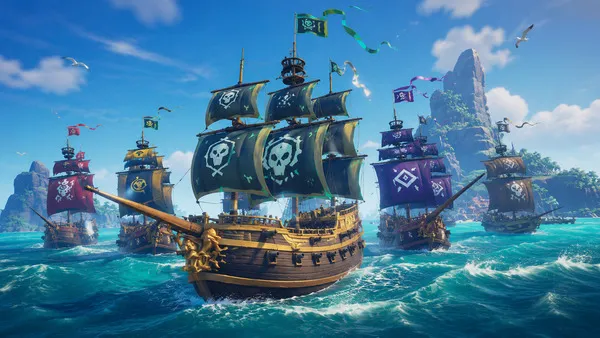
If you’re still unsure about some of the basic mechanics afterward, the Sea of Thieves Beginner Guide covers ship controls, inventory management, and navigation in much greater depth.
Don’t rush into PvP just because another ship appears
Your first instinct when spotting another ship is usually one of two extremes.
Either you panic and sail away as fast as possible, or you immediately think, “This is a pirate game—I guess we’re supposed to fight.”
Neither reaction is ideal.
The best decision during your first day is surprisingly simple:
Avoid unnecessary PvP.
That doesn’t mean hiding forever. It means recognizing that experienced crews have hundreds or even thousands of hours mastering naval combat.
A veteran crew isn’t just aiming cannons better. They’re coordinating sail angles, repairing below deck, boarding enemy ships, managing supplies, and predicting movement several minutes ahead.
Trying to beat them during your first hour is like entering a chess tournament after learning how the pieces move that morning.
One of the biggest misconceptions surrounding Sea of Thieves is that every encounter must end in combat. In reality, many crews ignore each other completely. Some wave. Some form temporary alliances. Others simply sail in opposite directions because they’re busy chasing their own objectives.
Learning to read another ship is a far more valuable skill than trying to sink every vessel you see.
For example:
- A ship parked beside a Skeleton Fort probably has an experienced crew focused on that event.
- A solo sloop quietly fishing near an island usually isn’t looking for trouble.
- A brigantine sailing directly toward you at full speed almost certainly wants interaction—and not always the friendly kind.
During your first day, every minute spent completing your own objectives teaches more than an unnecessary battle.
That doesn’t mean avoiding PvP forever. Naval combat eventually becomes one of the most rewarding parts of Sea of Thieves. But timing matters.
Think of your first day as learning to drive before entering a race.
Once you’re comfortable handling your ship, you’ll enjoy combat far more, and you’ll understand why positioning often wins battles long before the first cannonball lands.
When you’re ready to improve those skills, our Sea of Thieves PvP Guide breaks down everything from naval positioning to boarding tactics without overwhelming new players.
Choose one Trading Company instead of trying everything
The fastest way to slow your progression is trying to level every Trading Company at once.
This sounds backwards because new players naturally assume that doing “a little bit of everything” is efficient. In practice, it creates constant distractions.
You finish one Gold Hoarders Voyage.
Then you notice a Merchant Alliance delivery.
Someone suggests an Order of Souls bounty.
A World Event appears in the sky.
Suddenly three hours have passed and you’ve barely progressed anywhere.
A much better approach is picking one Trading Company for your first session and sticking with it.
For most players, Gold Hoarders is the easiest place to begin.
The objectives are straightforward. Find treasure maps, dig up chests, transport loot back to an Outpost, and sell it. The gameplay loop teaches exploration, navigation, treasure handling, and island recognition without adding too many mechanics at once.
Order of Souls is another excellent option if you prefer combat, while Merchant Alliance becomes more interesting once you’re comfortable navigating longer routes.
The important part isn’t choosing the “perfect” faction.
It’s choosing one.
Progress in Sea of Thieves feels much more satisfying when reputation steadily climbs instead of moving forward one level at a time across multiple factions.
There’s also a psychological benefit.
A focused session creates a clear story.
Instead of remembering, “I sailed around doing random things,” you’ll remember, “Today I became a better treasure hunter.”
That feeling of meaningful progression is one of the reasons players keep returning night after night.
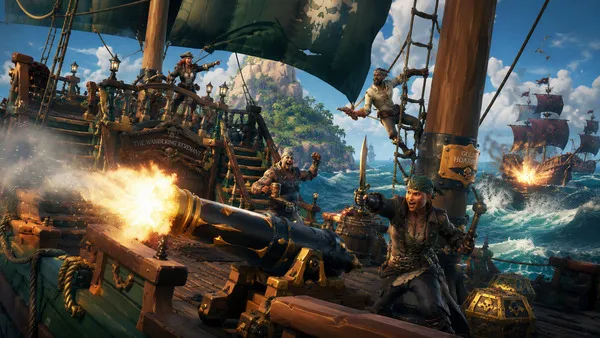
If you’re unsure which path fits your playstyle, our Trading Companies Guide explains what makes each faction unique, while Which Trading Company Should You Level First? compares them specifically for new pirates and different playstyles.
Complete Your First Voyage Instead of Chasing Every Icon on the Map
Once you’ve joined a Trading Company, resist the temptation to immediately sail toward the giant skull cloud, glowing tornado, or mysterious fleet of ships on the horizon.
The map in Sea of Thieves is designed to make everything look important. That’s intentional. Rare wants the world to feel alive, with opportunities constantly pulling you in different directions. The downside is that new players often mistake “available” for “recommended.”
Your first Voyage should become the center of your session.
For Gold Hoarders, that usually means digging up treasure from a map.
For Order of Souls, it’s hunting Skeleton Captains.
For Merchant Alliance, it’s delivering cargo safely.
None of these activities are particularly difficult, and that’s exactly why they’re perfect.
A Voyage quietly teaches almost every system you’ll rely on later. You’ll learn how to read maps, navigate using island names, dock your ship without crashing into every rock in sight, manage treasure, and return safely to an Outpost.
It also introduces the game’s most important gameplay loop.
Accept a contract.
Travel.
Solve a small challenge.
Collect loot.
Sell loot.
Increase reputation.
Unlock better Voyages.
That cycle never truly disappears, even hundreds of hours later. The objectives become more complex, the rewards become larger, and the risks become much higher, but the core rhythm stays surprisingly familiar.
One mistake that’s easy to make during your first session is abandoning a Voyage halfway through because something more exciting appears nearby.
A Skeleton Fort lights up in the sky.
A ghost fleet spawns.
Another crew starts fighting.
It feels like you’re missing out.
Most of the time, you’re not.
Experienced players ignore activities all the time because they’re focused on a specific objective. Learning that discipline early makes progression much smoother than constantly reacting to whatever appears on the horizon.
If you’re curious about how Voyages evolve into higher-level contracts and why some become dramatically more profitable later, the Voyages Guide explains every Voyage type and when each one becomes worth your time.
Learn How Gold Actually Works Before You Spend It
One of the biggest surprises for new players is realizing that gold isn’t nearly as valuable as they expected.
That sounds strange in a pirate game where almost everything revolves around treasure, but it’s true.
Gold is abundant.
Good decisions aren’t.
Many first-time players treat every chest like life-changing wealth. They carefully protect a few thousand gold, then immediately spend it on cosmetics because the shops are full of impressive outfits, flashy weapons, and beautifully decorated ships.
There’s nothing wrong with buying cosmetics.
Just understand what you’re getting.
Gold doesn’t increase your character’s power.
It doesn’t unlock stronger weapons.
It doesn’t improve your ship’s durability.
It doesn’t make your cannons deal more damage.
Everything that affects gameplay is built around player skill rather than equipment.
That’s one of the reasons Sea of Thieves has aged so well. A pirate with twenty hours and a pirate with two thousand hours have access to the same weapons. The veteran simply knows how to use them better.
During your first day, think of gold as a long-term resource rather than something that needs to be spent immediately.
Instead of asking:
“What can I buy?”
Ask:
“What should I understand before buying anything?”
That small mindset shift prevents one of the most common rookie regrets.
Another currency-related surprise comes from discovering that not every currency serves the same purpose.
You’ll encounter:
| Currency | Primary Purpose | Should Beginners Worry About It? |
|---|---|---|
| Gold | Cosmetics, ship customization, equipment appearances | Yes, but don’t rush to spend it |
| Doubloons | Special cosmetics, time-limited items, reputation rewards | Learn what they are, but save most of them |
| Ancient Coins | Premium currency purchased or found very rarely | No immediate priority |
Table 2. Understanding Sea of Thieves currencies during your first day.
Note: New players often overvalue gold and completely misunderstand Doubloons. Both become easier to manage once you understand the progression system.
After several hundred hours, one pattern becomes obvious.
The players constantly complaining about being “poor” usually aren’t earning too little gold.
They’re spending it without a plan.
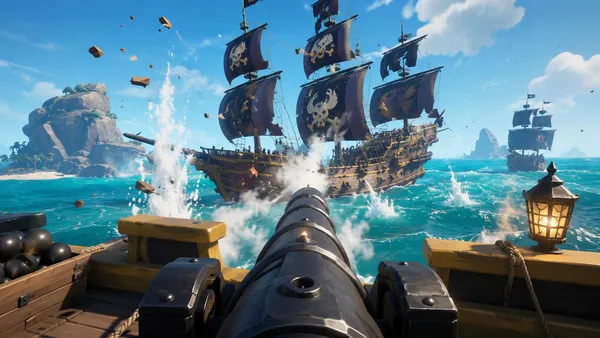
If you want to understand the fastest ways to build wealth later, read How to Make Gold Fast in Sea of Thieves after finishing your first few sessions. It’s much easier to optimize your income once you already understand the basic gameplay loop.
You’ll also save yourself plenty of confusion by reading Gold vs Doubloons vs Ancient Coins Explained, since the game doesn’t do a particularly good job of teaching the differences.
Ignore Cosmetics for Now, Even If They’re Amazing
Let’s be honest.
Rare’s art team knows exactly how to tempt new pirates.
Within minutes of reaching an Outpost, you’ll find legendary-looking jackets, glowing weapons, elaborate pirate hats, luxurious ship sets, colorful pets, and enough customization options to spend an hour browsing instead of sailing.
It’s incredibly tempting.
It’s also one of the easiest ways to lose focus during your first day.
Veteran players often joke that Sea of Thieves is a game where everyone spends hundreds of hours chasing cosmetics.
The joke is true.
The important part is the word “later.”
During your opening session, cosmetics don’t solve any of the problems you’re actually facing.
They won’t help you dock more smoothly.
They won’t improve your aim.
They won’t teach you where Outposts are located.
They won’t stop another crew from sinking your ship.
A pirate wearing expensive Ghost cosmetics can still sail directly into a rock.
One wearing the default clothing might effortlessly survive a four-ship battle.
That’s one of the healthiest design choices in the game.
Your appearance reflects your journey, not your combat strength.
Ironically, many experienced players intentionally wear beginner clothing because they enjoy surprising overly confident opponents.
Instead of spending your first evening comparing jackets and ship hulls, spend it building stories you’ll eventually celebrate with those cosmetics.
When you finally unlock an outfit after completing a difficult challenge or reaching a major milestone, it feels earned rather than purchased.
That’s a very different kind of satisfaction.
Eventually, you’ll absolutely want to personalize your pirate. Ship customization is one of the most enjoyable long-term goals in the game, and some cosmetic sets are genuinely impressive.
Just don’t let the shop become your first adventure.
If you’re wondering which rewards are actually worth saving for, Best Cosmetics Worth Unlocking highlights the cosmetic sets that feel meaningful because they’re tied to memorable achievements rather than simply expensive price tags.
Don’t Chase World Events on Day One
If there is one piece of advice that could save countless beginners from unnecessary frustration, it’s this:
Ignore the giant glowing symbols in the sky.
That giant skull isn’t inviting you to free treasure.
It’s quietly asking whether you’re prepared to fight experienced enemies, manage waves of skeletons, defend your ship, and possibly compete against other player crews at the same time.
Most new players aren’t.
And that’s perfectly normal.
World Events exist to create conflict.
They’re designed to attract multiple crews because everyone can see them from across the map.
That means you’re often competing not only against AI enemies but also against pirates who already know every shortcut, every cannon angle, and every trick for stealing loot at the last second.
It isn’t uncommon to spend thirty minutes clearing a difficult event only to watch another crew arrive moments before the treasure is collected.
That’s part of the game’s emergent storytelling, but it’s rarely an enjoyable experience for someone still learning how to park a ship.
A much better strategy is treating World Events as future milestones instead of immediate objectives.
Think of them like this:
- First learn how to sail.
- Then learn how to complete Voyages efficiently.
- Then learn naval combat.
- Finally, begin challenging World Events consistently.
That progression feels natural because every earlier lesson makes the next challenge easier.
Interestingly, after enough hours, your relationship with World Events completely changes.
Instead of seeing them as intimidating objectives, you begin evaluating them almost automatically.
Is another crew already there?
How many supplies do we have?
Is the reward worth the time?
Can we defend the loot afterward?
Those are questions experienced players ask before even raising anchor.
You’ll reach that point too.
Just not on Day One.
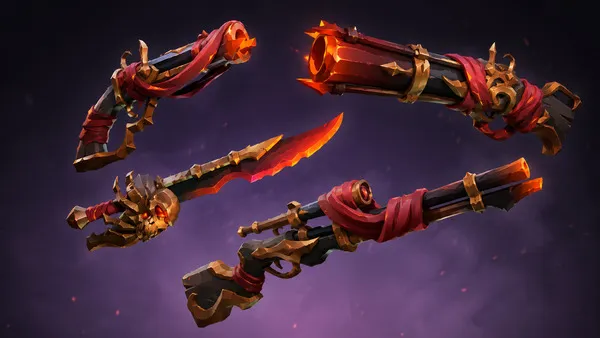
When that time comes, How World Events Work explains every major event, while dedicated guides for Skeleton Forts, Fort of Fortune, and Ashen Winds help you decide which activities are worth tackling first and which are better saved for later.
Play With a Goal Instead of Wandering Around the Map
By the time you’ve finished a couple of Voyages, something interesting starts to happen.
The world feels smaller.
Not because you’ve explored everything, but because you’ve stopped reacting to every distraction.
This is usually the moment when Sea of Thieves begins to “click.”
Many new players assume the game is about random adventures. That’s only partially true. The stories are unpredictable, but the players who consistently enjoy those stories almost always begin each session with a purpose.
That purpose doesn’t have to be complicated.
Maybe today’s goal is earning enough reputation to unlock the next Gold Hoarders Voyage.
Maybe it’s practicing cannon accuracy.
Maybe it’s simply learning where three nearby islands are located without constantly checking the map.
Small objectives create momentum.
Without them, it’s surprisingly easy to spend two hours sailing from island to island collecting random loot that doesn’t contribute toward anything meaningful.
One habit developed after countless sessions has saved more time than any advanced strategy ever could.
Before raising anchor, ask one simple question:
“If I log off in two hours, what do I want to have accomplished?”
That answer immediately changes your decisions.
Instead of chasing every ship you see, you’ll ask whether the fight helps your goal.
Instead of stopping at every island, you’ll decide whether it’s worth the detour.
Instead of filling your deck with random treasure, you’ll prioritize loot that actually advances your Trading Company.
Experienced crews rarely look busy.
They look focused.
There’s a difference.
One evening perfectly demonstrated this idea. A new crewmate kept suggesting we investigate every glowing object we spotted. A Skeleton Sloop appeared. Then a shipwreck. Then a Reaper Chest. Then another crew on the horizon.
Each looked tempting.
Instead, we finished the Athena Voyage we had started, sold everything safely, and earned significantly more gold than we probably would have by constantly changing plans.
The lesson wasn’t “ignore interesting things.”
It was understanding that saying no is often the fastest way to reach your real objective.
That’s a mindset most beginners don’t develop until much later.
Your Ideal First Five Hours in Sea of Thieves
Many guides tell you what activities exist.
Far fewer explain the order in which those activities actually make sense.
If someone asked for the most efficient way to spend their first evening, this is the roadmap that consistently produces confident new players rather than confused ones.
| Time | Recommended Focus | Why It Comes First |
|---|---|---|
| Hour 1 | Complete the Maiden Voyage and practice sailing | Build confidence with core mechanics |
| Hour 2 | Join one Trading Company and finish your first Voyage | Learn the progression loop |
| Hour 3 | Complete another Voyage while improving navigation | Develop consistency instead of rushing |
| Hour 4 | Experiment with selling loot, repairing, cooking, and supplies | Become comfortable with everyday systems |
| Hour 5 | Explore naturally without worrying about efficiency | Start creating your own adventures |
Table 3. A realistic five-hour roadmap for new Sea of Thieves players.
Note: The exact timing doesn’t matter. The order does. Each step builds naturally on the previous one instead of overwhelming you with too many mechanics at once.
This roadmap may look slower than videos promising “100,000 Gold in Your First Hour.”
Ignore those.
Those videos are usually made by experienced players using optimized routes, extensive map knowledge, and mechanics that beginners simply don’t have yet.
The irony is that slowing down during your first few hours often accelerates your long-term progress.
Once you’re comfortable following this routine, the next step is expanding it into a longer progression plan. That’s where the Sea of Thieves 30-Hour Progression Roadmap becomes useful, showing exactly how experienced players transition from beginner content into Pirate Legend goals.
Common Day-One Mistakes That Almost Everyone Makes
Every experienced pirate has a story that starts with, “I can’t believe I actually did that.”
Some accidentally dropped anchor during combat.
Others sailed for twenty minutes with the anchor still lowered.
Some forgot to repair a single hole and watched their ship slowly disappear beneath the waves.
Embarrassing moments are part of the experience.
The goal isn’t avoiding every mistake.
It’s avoiding the ones that make people quit before they discover why the game is so special.
Here are the mistakes seen most often from new crews.
Trying to fight every ship
Just because another crew appears doesn’t mean combat is the best decision.
Sometimes the smartest victory is simply finishing your Voyage and selling your treasure.
Constantly switching Trading Companies
Progress feels much slower when reputation is scattered across multiple factions.
Sticking with one company during your first session creates a much stronger sense of achievement.
Forgetting supplies matter
Food, cannonballs, wooden planks, and throwables aren’t optional.
Before leaving any Outpost, make it a habit to gather nearby supplies.
Future you will be grateful when the first Skeleton Ship appears.
Obsessing over expensive cosmetics
Every Outpost shop is designed to tempt you.
There’s plenty of time to decorate your pirate later.
Your first memories should come from adventures, not shopping.
Ignoring your surroundings
Some players become so focused on treasure maps that they never notice another ship approaching.
Develop the habit of scanning the horizon every few minutes.
It becomes second nature surprisingly quickly.
Assuming failure means wasted time
One of the hardest lessons for new players is accepting that losing treasure doesn’t automatically mean losing progress.
Some of the funniest stories in Sea of Thieves begin with complete disaster.
The crew gets sunk.
The loot disappears.
Someone accidentally sets the ship on fire.
Hours later, that’s the story everyone remembers.
Very few people fondly remember the session where everything went perfectly according to plan.
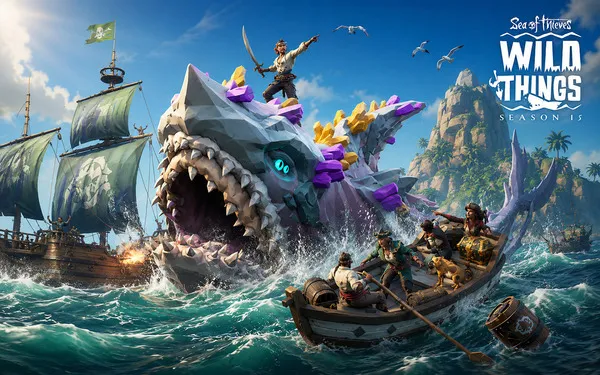
If you’d like to avoid the mistakes that cost players the most time and gold, 15 Beginner Mistakes That Cost You Thousands of Gold dives much deeper into the habits that separate confident pirates from permanently frustrated ones.
What Should You Do on Your Second Day?
Your first day isn’t about becoming powerful.
It’s about becoming comfortable.
Once you’ve reached that point, the second session feels completely different.
Instead of asking, “How do I play?”
You’ll start asking much better questions.
“How do I earn gold faster?”
“Which Trading Company should I level next?”
“When should I try World Events?”
“Should I buy my own ship?”
Those questions signal something important.
You’re no longer surviving the tutorial phase of Sea of Thieves.
You’re beginning your long-term journey.
A solid second-day plan might look something like this:
- Finish two or three Voyages for your chosen Trading Company.
- Learn efficient island navigation instead of relying entirely on the map table.
- Begin collecting supplies automatically before every voyage.
- Experiment with sailing in rough weather.
- Practice landing cannon shots on Skeleton Ships whenever opportunities appear.
- Start recognizing landmarks around the Sea of Thieves instead of treating every island as unfamiliar.
This is also the stage where progression starts opening up in meaningful ways.
You’ll hear players talking about Emissary Flags, Captaincy, world events, and gold farming routes.
Don’t feel pressured to understand everything immediately.
Instead, unlock those systems one at a time.
The game becomes much more rewarding when each mechanic arrives naturally instead of all at once.
If increasing your income is your next priority, Best Gold-Making Activities Ranked by Profit Per Hour compares the most efficient ways to earn gold once you’ve mastered the basics.
As your reputation grows, How the Emissary System Works explains why experienced crews willingly take greater risks for significantly larger rewards.
Eventually you’ll also reach the point where buying your own ship becomes worthwhile. Before spending that gold, read Is Captaincy Worth Unlocking? to understand what Captaincy actually changes and why many veteran players consider it one of the biggest quality-of-life upgrades in the entire game.
The biggest difference between new players who stay and those who leave isn’t mechanical skill.
It’s momentum.
Players who always know what their next goal is almost never run out of reasons to return.
That’s why your first day shouldn’t end with, “I guess I’ve seen everything.”
It should end with something much more exciting.
“I know exactly what I’m doing tomorrow.”
Frequently Asked Questions
Do I have to complete the Maiden Voyage before entering the main game?
No, but you absolutely should.
Technically, Sea of Thieves lets you jump into Adventure mode without finishing the Maiden Voyage. From a practical standpoint, skipping it usually creates unnecessary frustration. The tutorial teaches sailing, repairing, treasure collection, cannon usage, and several mechanics that the game rarely explains again. Spending twenty minutes there is far more valuable than spending your first two hours learning everything through mistakes.
Which Trading Company is best for complete beginners?
For most players, Gold Hoarders is the easiest starting point.
Its Voyages are straightforward, the objectives naturally teach exploration, and the progression feels rewarding without introducing too many systems at once. Order of Souls is a good alternative if you enjoy combat, while Merchant Alliance becomes more enjoyable once you’re comfortable navigating between islands.
Should I play in High Seas or Safer Seas on my first day?
If you’re nervous about PvP or simply want to learn the controls, Safer Seas is an excellent place to start.
If you enjoy unpredictable encounters and don’t mind occasionally losing treasure, High Seas offers the full Sea of Thieves experience. Neither option is objectively better. It depends on what kind of first impression you want from the game.
Can I reach Pirate Legend quickly if I follow this roadmap?
This roadmap isn’t designed to speedrun Pirate Legend.
Instead, it helps you build the habits that make the journey smoother. Players who understand navigation, resource management, and Trading Companies usually progress more efficiently than players who rush through content without understanding how the systems connect.
Why do experienced players seem to ignore so many World Events?
Because they know every activity has an opportunity cost.
Veteran crews don’t chase every glowing cloud in the sky. They evaluate the reward, estimate the risk, and compare it with whatever objective they’re already pursuing. Learning when to ignore content is just as important as learning when to engage with it.
Why do so many beginners feel overwhelmed after the tutorial?
Because Sea of Thieves intentionally avoids giving players a strict progression path.
The game expects you to create your own goals, but most people are used to objective markers, quest logs, and linear campaigns. Once you replace “What should the game tell me to do?” with “What do I want to accomplish today?”, the sandbox starts making much more sense.
Is earning gold the most important objective early on?
Not really.
Gold is exciting during your first few sessions because every treasure chest feels valuable. After dozens of hours, you’ll realize knowledge is the real currency. A player who understands efficient sailing, smart positioning, and progression systems can recover thousands of gold in a single evening. A player who only chases treasure often stays poor much longer.
Why do experienced crews seem so much faster?
Speed comes from routine rather than better equipment.
Veterans automatically collect supplies, adjust sails without discussing it, recognize islands from a distance, and know which loot is worth prioritizing. None of those advantages are locked behind upgrades. They’re simply habits built over time.
What’s the most important thing to accomplish during your first day?
Learn the core gameplay loop instead of trying to maximize rewards.
A successful first session means you understand how Voyages work, how to navigate confidently, how to sell treasure, and what objective you’ll pursue next time you log in. Those skills create a much stronger foundation than chasing the biggest treasure pile you can find.
Should I worry about buying cosmetics immediately?
No.
Cosmetics are one of the best long-term rewards in Sea of Thieves, but they shouldn’t become your first priority. During your opening hours, invest your attention in learning mechanics rather than choosing outfits. The cosmetics you unlock later will feel much more meaningful because they’ll represent adventures you’ve actually experienced.
What’s the biggest mistake new players make?
Trying to experience every feature in a single session.
The game contains Voyages, World Events, Tall Tales, PvP, fishing, Captaincy, Trading Companies, seasonal content, and countless side activities. None of them disappear if you ignore them on Day One. Focusing on one objective at a time leads to faster learning and a much more enjoyable experience.
What’s the best mindset to have before starting Sea of Thieves?
Treat your first day as the beginning of a long pirate career, not as a race.
You’ll sink ships, lose treasure, make navigation mistakes, and occasionally sail in the wrong direction for ten minutes before realizing it. Every experienced pirate has done exactly the same thing. The players who stay with Sea of Thieves aren’t the ones who never fail—they’re the ones who laugh, learn something, and set sail again.
Final Thoughts
The first few hours in Sea of Thieves often determine whether someone becomes a lifelong pirate or quietly moves on to another game.
That’s why the best Day One strategy isn’t chasing the biggest reward. It’s building confidence.
Complete the Maiden Voyage. Pick one Trading Company. Finish a few Voyages. Learn your ship. Ignore the urge to do everything at once.
Those steps may sound simple, but they’re surprisingly effective because they match the way the game naturally unfolds. Once the basic systems become second nature, the world opens up in ways that no tutorial could ever explain.
Eventually you’ll steal treasure from rival crews, survive impossible storms, sink ghost fleets, complete Tall Tales, unlock legendary cosmetics, and probably tell stories that sound too ridiculous to be true. That’s the magic of Sea of Thieves. The memorable moments rarely happen because you followed a checklist. They happen because the checklist gave you enough confidence to create your own adventure.
If you’re still in those opening hours, don’t worry about becoming a Pirate Legend yet.
Just become a pirate who’s excited to log in again tomorrow.
From there, everything else comes naturally.
Before your next session, continue with the Sea of Thieves 30-Hour Progression Roadmap to map out your first few weeks at sea. If you’re already wondering how to earn gold more efficiently, Best Gold-Making Activities Ranked by Profit Per Hour is the logical next step. And once you’re comfortable handling your ship, the Sea of Thieves PvP Guide will prepare you for the unpredictable encounters that make every voyage feel different.
One successful day at sea doesn’t make you an expert.
It gives you something far more valuable.
A reason to keep sailing.