Popular Now










Introduction
If you’re searching for a 99 Nights In The Forest beginner guide, the fastest way to stay alive isn’t learning every crafting recipe or memorizing the map. It’s understanding what the game expects from you during the first few nights. Most new players don’t fail because they’re slow or unlucky. They fail because they spend time on things that feel productive but don’t actually increase their chances of surviving after sunset.
That realization only came after several runs. The first attempt ended before Night 3 because exploring seemed more exciting than preparing camp. Another run was packed with resources, but almost all of them were useless when the first serious enemy wave arrived. The game rewards planning far more than constant movement, and once that clicks, progression becomes much smoother.
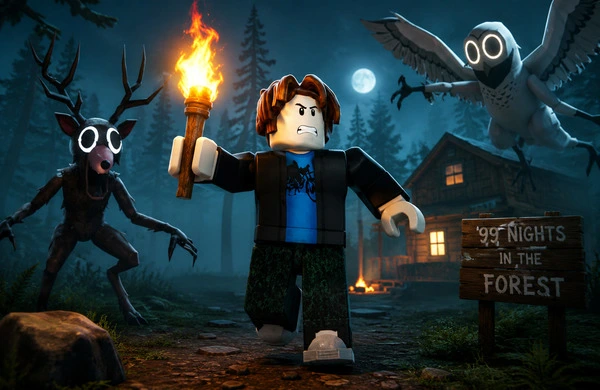
Unlike many Roblox survival games that encourage endless farming, 99 Nights In The Forest constantly asks one question:
“If night starts in two minutes, are you actually ready?”
Everything you do during the day should answer that question.
This guide focuses on building that mindset. Instead of throwing dozens of disconnected tips at you, it explains how experienced players prioritize resources, decide when to explore, when to retreat, and why some early decisions matter far more than expensive equipment. By the end, reaching Night 10 should feel consistent instead of lucky.
Understand the Core Survival Loop Before Doing Anything Else
The single biggest mistake beginners make is treating 99 Nights In The Forest like an exploration game. It isn’t. Exploration only exists to support survival, and survival is driven by a loop that repeats every single day.
Every successful run follows roughly the same rhythm.
| Phase | Your Goal | Biggest Beginner Mistake |
|---|---|---|
| Morning | Gather essential resources | Picking up everything you see |
| Midday | Craft and upgrade | Crafting low-value items too early |
| Afternoon | Prepare camp before sunset | Exploring too far from base |
| Night | Defend and survive | Fighting every enemy instead of managing risk |
| Dawn | Recover and improve | Repeating the same inefficient routine |
Table 1. The core survival loop in 99 Nights In The Forest.
Note: Experienced players spend less time reacting and more time preparing for the next cycle.
The interesting part is that the game quietly teaches efficiency. Resources are limited, travel consumes valuable daylight, and every unnecessary detour increases the chance of entering the night underprepared.
Think of daytime as an investment rather than free time. Every minute should improve your odds of surviving the next night. If it doesn’t, it’s probably a bad decision.
That mindset changes how you look at almost every mechanic. Instead of asking, “Can I craft this?” start asking, “Will this help me survive tonight?” The answer is often very different.
A surprising number of players also underestimate how quickly small mistakes snowball. Spending one extra minute chasing random loot may seem harmless, but arriving back at camp without enough fuel, food, or repair materials can turn a comfortable night into a desperate scramble. The game rarely punishes a single mistake. It punishes several small ones happening in a row.
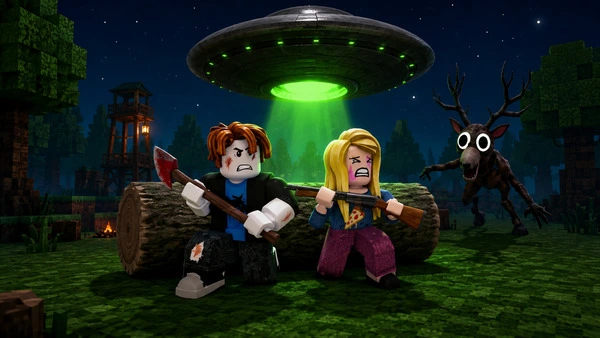
Before learning advanced strategies, it’s worth becoming familiar with every resource and its purpose. Knowing which materials deserve inventory space immediately makes early decisions much easier. If you’re unsure what every item does, check Complete Item List and Uses before worrying about late-game optimization.
The players who consistently survive long runs aren’t necessarily the fastest. They’re the ones who rarely waste an entire in-game day.
Your First Five Minutes Matter More Than Your First Hour
The opening minutes determine the pace of the entire run. Recovering from a weak start is possible, but it usually means spending several nights catching up instead of progressing.
One habit that separates experienced players from beginners is refusing to panic-loot. New players often grab every object they walk past until their inventory fills with items they won’t use for another ten or twenty minutes. Meanwhile, the essentials are still missing.
A much better approach is to build momentum instead of collecting souvenirs.
What should you collect immediately?
Your first priority is anything that directly supports surviving the coming night.
Focus on resources that help you:
- Start a reliable fire.
- Craft your first practical tools.
- Maintain a steady food supply.
- Repair or defend your camp.
- Stay close enough to return before sunset.
You’ll notice none of those goals involve rare materials. Early progression isn’t about finding legendary loot. It’s’s about creating stability.
Players who survive consistently often ignore shiny discoveries simply because they don’t solve today’s problems.
If you’re unsure whether an item deserves inventory space, imagine sunset arriving within the next minute. Would that item immediately help? If not, it can probably wait.
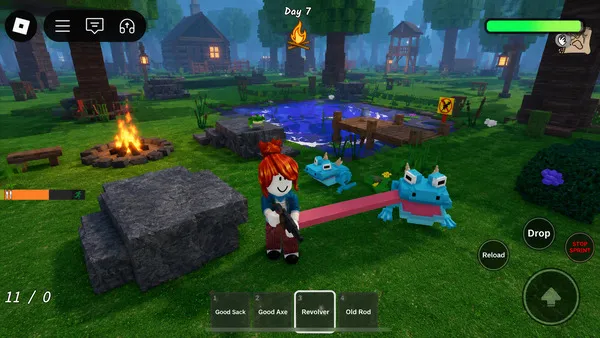
What should you ignore?
Almost every beginner gets distracted by exploration.
The map is designed to tempt curiosity, and that’s intentional. Interesting landmarks, unusual structures, and distant resources constantly encourage players to walk just a little farther.
That curiosity usually ends the same way.
The sun starts setting.
Inventory is full.
Camp is far away.
Food is running low.
Now the player is sprinting home while enemies become increasingly dangerous.
The game never tells you that exploring is expensive, but experienced players quickly learn that distance has a hidden cost. Every extra minute spent away from camp is one less minute available for preparation.
Exploration becomes dramatically safer after building a stable foundation. Until then, discipline is usually stronger than curiosity.
Why exploring too early gets beginners killed
Many survival games reward aggressive exploration from the start.
99 Nights In The Forest does the opposite.
The first few days should be treated like building a business rather than going on an adventure. Before expanding, you need predictable income. In survival terms, that means predictable food, predictable shelter, predictable crafting materials, and predictable recovery after each night.
One lesson that becomes obvious after multiple long runs is that experienced players don’t cover more ground during the first day. They simply waste less movement. Every trip has a purpose, every return fills a missing need, and every crafted item supports another objective.
That’s why you’ll sometimes see a beginner with twice as many resources still struggling while someone carrying fewer items reaches Night 10 comfortably. The difference isn’t inventory size. It’s decision quality.
If your early game feels inconsistent, don’t worry about finding hidden locations yet. Master the opening routine first. The advanced optimization comes later, and that’s where The Best Progression Path From Night 1 to Night 99 becomes much more valuable than trying to improvise every run.
A Priority System Every Beginner Should Follow
If you can only remember one thing from this guide, remember this: not all upgrades are equal. In the early game, every decision competes for limited time and resources, so choosing the right priority matters far more than choosing the perfect item.
A simple priority system works surprisingly well for almost every new run.
| Priority | Why It Comes First | Delay This and You’ll Notice… |
|---|---|---|
| Food | Keeps exploration sustainable | Constant interruptions to search for supplies |
| Fire | Essential for surviving nights | Camp becomes difficult to defend |
| Basic Weapon | Gives you breathing room during encounters | Every fight becomes high risk |
| Shelter Improvements | Increases long-term stability | Resources disappear into constant repairs |
| Expansion | Improves future efficiency | Little benefit if your core survival isn’t secure |
Table 2. Recommended upgrade priority for beginners.
This order isn’t exciting, but it’s incredibly reliable.
One common trap is crafting whatever becomes available first. That feels like progress because you’re constantly unlocking new tools, yet many of those upgrades don’t solve immediate survival problems. The result is a camp full of equipment but no clear strategy.
Veteran players think differently. Before crafting anything, they ask one simple question:
“Will this make tonight easier?”
If the answer is yes, build it.
If the answer is no, save the resources.
That single habit prevents a surprising amount of waste over a long run.
Another overlooked skill is knowing when to stop gathering. Many beginners keep farming because collecting resources feels safe, but every additional trip carries risk. At some point, another stack of materials is worth less than returning to camp and preparing for nightfall.
This is also why experienced players seem to “always have enough.” They aren’t necessarily finding more resources. They’re spending fewer on unnecessary upgrades and making smarter decisions throughout the day.
As your runs become longer, this simple priority system naturally evolves into broader resource planning, inventory optimization, and efficient progression. Those advanced concepts are explored in Why Good Players Always Have More Resources, where the focus shifts from surviving each night to building momentum that carries you all the way through the late game.
Night-by-Night Beginner Roadmap
The easiest way to survive longer isn’t becoming better at combat. It’s having the right objective every night. One pattern appears over and over after dozens of runs: players who fail usually try to accomplish too much in a single day, while players who consistently reach higher nights focus on one meaningful improvement before sunset.
Thinking in milestones instead of endless farming keeps the game manageable and prevents panic once darkness arrives.
Night 1: Build Stability, Not Progress
The first night isn’t about proving you can fight. It’s about proving your camp can survive.
Many beginners sprint across the map looking for rare loot, only to return with an inventory full of random materials and no practical setup. Ironically, the most successful first night often looks boring. The camp is small, resources are limited, and the player spends more time organizing than exploring.
That’s exactly what you want.
Your first night checklist should look something like this.
| Goal | Why It Matters |
|---|---|
| Secure a fire source | Keeps your camp functional after dark |
| Gather reliable food | Reduces unnecessary exploration later |
| Craft one dependable weapon | Enough to defend yourself without overspending resources |
| Learn nearby landmarks | Makes future gathering routes shorter |
| End the day before sunset | Preparation always beats rushing home |
Table 3. Priorities for surviving Night 1.
Notice what’s missing from that list. There is no mention of rare equipment, hidden locations, or expensive upgrades. Those things can wait.
Nights 2 to 5: Turn Your Camp Into a Routine
Once Night 1 is over, your objective changes completely.
Now you’re no longer trying to survive one difficult evening. You’re building habits that will make every following night easier.
This is where experienced players quietly pull ahead.
Instead of wandering in random directions every morning, they develop efficient routes. Instead of crafting every available upgrade, they collect resources with a purpose. Every trip away from camp has a reason, and every return improves something essential.
One habit worth copying is finishing daily objectives before you actually run out of daylight. Waiting until sunset to head home almost always leads to rushed decisions, missed resources, or unnecessary fights.
Another lesson becomes obvious after longer sessions. Inventory management starts to matter more than inventory size. Carrying fewer useful items often produces better results than carrying everything you find.
If your runs keep falling apart around this stage, don’t assume combat is the problem. Most likely, the issue began several minutes earlier when you spent valuable daylight on low-priority tasks.
Nights 6 to 10: Start Thinking Ahead
Reaching Night 6 consistently means you’ve survived the tutorial that the game never officially explains.
From this point onward, every day should prepare for future nights instead of simply recovering from the previous one.
A useful mental shift happens here.
Beginners ask:
“What do I need today?”
Experienced players ask:
“What problem will I have three nights from now?”
That difference changes almost every decision.
Maybe you already have enough food for today, but not enough repair materials for the next major encounter. Maybe another weapon sounds tempting, but improving your camp would save more resources over the next several nights.
Long runs reward players who delay gratification.
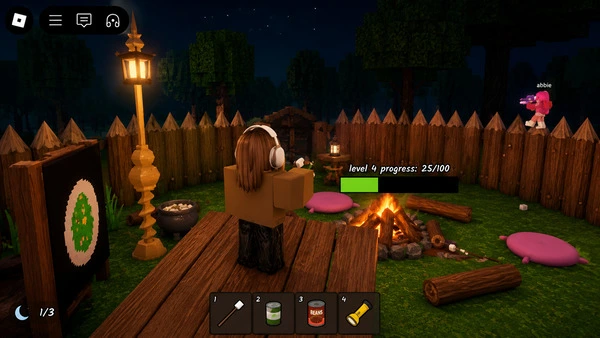
If you’re unsure how your priorities should evolve after the opening hours, The Best Progression Path From Night 1 to Night 99 explains how experienced players gradually shift from survival into long-term optimization without wasting valuable resources along the way.
How to Manage Resources Without Running Out
Running out of resources rarely happens because the world doesn’t provide enough. It usually happens because players spend them before understanding their true value.
The first dozen hours spent in the game completely changed the way resources were viewed. At first, every stack looked equally important. Wood, food, crafting materials, miscellaneous loot… everything went into the inventory. Later, it became obvious that some resources create future opportunities, while others simply consume space.
That’s why resource management isn’t really about gathering more. It’s about wasting less.
A simple framework helps.
| Resource Type | Spend Freely | Spend Carefully |
|---|---|---|
| Basic materials | Daily crafting | Decorative upgrades |
| Food | Staying healthy | Hoarding excessive supplies |
| Repair materials | Essential defenses | Low-impact equipment |
| Rare resources | Critical upgrades | Experimental crafting |
Table 4. Resource spending priorities for early-game survival.
The hardest habit to learn is saying no.
You’ll constantly unlock recipes that look exciting. Some of them are genuinely useful later, but crafting everything as soon as it becomes available is one of the fastest ways to stall your progression.
Whenever resources feel scarce, ask yourself three questions.
- Will this help me survive tonight?
- Will this save resources tomorrow?
- Is there another upgrade with a bigger impact?
If two of those answers are “no,” wait.
Another overlooked trick is returning to camp slightly earlier than necessary. Most beginners squeeze every second out of daylight, while experienced players often spend those extra minutes repairing equipment, organizing storage, or preparing for the next morning.
Those quiet minutes rarely feel exciting, but they prevent many disasters later.
Eventually, you’ll notice something interesting. Long runs don’t feel richer because players find more resources. They feel richer because fewer resources disappear into unnecessary decisions.
If you’re interested in the deeper strategy behind efficient gathering, crafting, and long-term inventory planning, Why Good Players Always Have More Resources explores the economic side of survival in much greater detail.
The Biggest Beginner Mistakes
Most beginner mistakes have very little to do with mechanical skill. They come from making logical decisions that happen to be wrong for this particular game.
That’s why watching experienced players can feel confusing. They often ignore valuable loot, retreat from fights they could probably win, and return to camp much earlier than expected.
They’re not playing cautiously.
They’re playing efficiently.
Mistake 1: Treating Every Day Like an Adventure
The world constantly encourages exploration, but exploration without preparation usually creates more problems than rewards.
Many failed runs begin with the same sentence.
“I just wanted to check one more area.”
That “one more area” often turns into a race against sunset.
Mistake 2: Fighting Every Enemy
Winning a fight doesn’t automatically make it worthwhile.
If defeating an enemy costs valuable food, durability, or healing supplies, the encounter may actually leave you weaker than simply avoiding it.
Good survival games reward smart decisions more often than aggressive ones.
Mistake 3: Crafting Because You Can
Unlocking a recipe doesn’t mean it’s the right time to build it.
Some upgrades provide immediate value.
Others simply consume resources that would have been more useful elsewhere.
One of the easiest ways to improve your survival rate is delaying unnecessary crafting until your economy feels stable.
Mistake 4: Ignoring Time
New players usually monitor health.
Veterans monitor daylight.
Time is arguably the most valuable resource in the game because you can never recover wasted daylight. Every unnecessary detour permanently reduces preparation time before the next night begins.
Mistake 5: Solving Today’s Problem Instead of Tomorrow’s
This mistake is surprisingly common.
Imagine reaching camp with just enough food for tonight.
Most beginners stop gathering.
Experienced players keep collecting because tomorrow’s exploration depends on today’s preparation.
That mindset creates a snowball effect. Camps become stronger, inventories stay healthier, and every following day becomes slightly easier than the last.
The contrast between beginners and veterans can be summarized surprisingly well.
| Beginner Thinking | Veteran Thinking |
|---|---|
| Win this fight | Preserve resources for future fights |
| Fill every inventory slot | Carry only what has value |
| Explore farther | Explore smarter |
| Craft everything | Craft only high-impact upgrades |
| React to problems | Prepare before problems appear |
Table 5. The mindset difference between new and experienced players.
Most of these mistakes disappear naturally with experience, but recognizing them early dramatically shortens the learning curve.
If you notice yourself repeating several of these habits, don’t worry. Nearly everyone does during their first few runs. The important part is understanding why those decisions create problems. Once that clicks, you’ll begin surviving longer without feeling like you’ve suddenly become mechanically better.
For a deeper breakdown of these habits and the reasoning behind them, The Biggest Mistakes New Players Make expands each example with real gameplay situations and practical solutions that are difficult to learn from trial and error alone.
When Should You Fight and When Should You Run?
One of the biggest milestones in 99 Nights In The Forest isn’t crafting better weapons. It’s realizing that survival games aren’t designed around killing everything you see. The players reaching Night 50 and beyond often win because they avoid unnecessary fights, not because they dominate every encounter.
That sounds counterintuitive until you’ve experienced a few long runs.
Early on, every enemy feels like an opportunity for loot or experience. After enough hours, each encounter starts looking like a business transaction.
“What will this fight cost me?”
That question matters far more than whether you can win.
A victory that leaves you with half your health, damaged equipment, and no food is usually a loss disguised as success.
The safest habit is to evaluate three factors before committing.
| Situation | Fight | Retreat |
|---|---|---|
| Enemy blocks your objective | ✓ | |
| Low health or limited supplies | ✓ | |
| Night is about to begin | ✓ | |
| Camp is nearby and defended | ✓ | |
| Exploring far from home | ✓ | |
| Multiple enemies closing in | ✓ |
Table 6. A simple decision framework for combat.
Something that doesn’t get mentioned enough is how fighting changes your schedule.
Imagine spending two minutes dealing with enemies while daylight is fading. You may win the battle, but lose the race back to camp. That’s a terrible trade.
Long-term survival isn’t about courage. It’s about choosing which risks are actually worth taking.
As your runs become longer, enemy behavior becomes easier to predict. Understanding patrol patterns, attack timing, and aggro distances makes encounters far less dangerous than simply improving your gear. That’s covered in much greater depth in How Enemy AI Really Works, while Enemy Guide breaks down individual enemy types and how to approach each one efficiently.
Building Your First Safe Base
Your first base doesn’t need to impress anyone. It needs to remove stress from your daily routine.
Many beginners unknowingly design camps like permanent homes. They spend enormous amounts of time decorating, expanding, or experimenting with layouts before the basics are stable.
Experienced players build something very different.
They build workflows.
A good base reduces walking, shortens crafting time, and keeps essential resources within easy reach. Every unnecessary step becomes surprisingly noticeable after twenty or thirty in-game days.
A useful early layout looks something like this.
| Area | Priority | Reason |
|---|---|---|
| Fire source | Highest | Central point for every return trip |
| Storage | High | Faster organization before night |
| Crafting area | High | Reduces unnecessary movement |
| Defensive position | Medium | Easier reactions during attacks |
| Expansion space | Low | Useful later, unnecessary early |
Table 7. Suggested early-game camp layout.
One memorable mistake during an early run was building an oversized camp almost immediately. It looked great, but every repair required extra walking, every crafting session involved crossing the base, and nighttime defense became unnecessarily complicated.
The next run used a camp half the size.
It lasted three times longer.
Compact bases are easier to defend, faster to maintain, and much more forgiving when resources are tight.
Another overlooked detail is leaving room for future upgrades instead of placing structures wherever space happens to be available. A little planning during the first few nights saves a surprising amount of rebuilding later.
If you’re looking for detailed layouts, expansion ideas, or efficient designs for later progression, Building Guide explores different camp strategies, while Best Base Locations compares the safest places to establish your first permanent settlement.
Weapons Beginners Should Actually Craft
Not every weapon deserves your resources, especially during the early game.
This is another area where new players often misunderstand progression. Stronger doesn’t automatically mean better. A weapon that consumes rare materials but only provides a small damage increase may actually slow your overall progress.
The first goal isn’t maximizing damage.
It’s maximizing efficiency.
When evaluating a weapon, four questions usually matter more than raw stats.
- How expensive is it to craft?
- How often will you actually use it?
- Can you repair it easily?
- Does it solve your current problem?
Those questions eliminate many poor crafting decisions.
A practical comparison looks like this.
| Weapon Type | Early Game Value | Long-Term Value |
|---|---|---|
| Basic melee weapon | Excellent | Moderate |
| Durable mid-tier weapon | Very High | Excellent |
| Expensive rare weapon | Low | High |
| Situational specialty weapon | Low | Situational |
Table 8. General weapon priorities for new players.
One pattern becomes obvious after enough playtime.
Players struggling to survive usually upgrade weapons first.
Players reaching higher nights often upgrade consistency first.
That might mean carrying a slightly weaker weapon that is cheap to repair instead of an expensive one that constantly drains valuable resources.
The same philosophy applies throughout the entire game. Reliability almost always beats maximum damage.
Once you’ve established a stable economy, then it makes sense to optimize for higher damage, specialized builds, or late-game combat strategies. If you’re unsure which weapons continue to perform well after the opening hours, Best Weapons Ranked compares their strengths, weaknesses, and overall value throughout an entire run.
How to Reach Night 10 Consistently
Getting to Night 10 shouldn’t depend on luck.
After enough practice, it becomes surprisingly repeatable because most successful runs follow the same habits rather than the same route.
The biggest difference isn’t reaction speed.
It’s reducing avoidable mistakes.
Before ending each day, mentally run through a quick checklist.
| Question | If Yes | If No |
|---|---|---|
| Do you have enough food? | Continue preparing | Gather before sunset |
| Is your main weapon ready? | Save durability | Repair or replace |
| Is the camp organized? | Rest and prepare | Spend a few minutes organizing |
| Are key resources stocked? | Plan tomorrow’s route | Refill essential supplies |
| Is there enough daylight left? | Short gathering trip | Stay close to camp |
Table 9. End-of-day survival checklist.
This routine may seem repetitive, but that’s exactly the point.
Consistency wins.
Many survival games reward improvisation.
99 Nights In The Forest rewards preparation.
Looking back, the most dramatic improvement didn’t come from learning hidden mechanics or discovering secret loot. It came from developing a routine that removed unnecessary decisions. Once mornings, afternoons, and evenings each had a clear purpose, survival stopped feeling chaotic.
Another useful observation is that successful players rarely panic.
When things go wrong, they already know which objective to sacrifice. Maybe exploration gets canceled. Maybe an upgrade waits until tomorrow. Maybe a risky fight simply isn’t worth it.
That flexibility is difficult to teach because it develops through experience, but it always begins with having a reliable routine.
If you’re consistently reaching Night 10, you’ve already mastered the hardest lesson in the early game: survival is less about perfect execution and more about making slightly better decisions every single day. From there, the focus shifts away from staying alive and toward optimizing every aspect of your progression, resource economy, and long-term strategy.
Frequently Asked Questions
Is 99 Nights In The Forest better played solo or with friends?
Both modes work, but they’re almost different games.
Solo play rewards planning, efficient resource management, and knowing when to avoid unnecessary risks. Every mistake comes directly out of your own inventory, so poor decisions are punished quickly.
Co-op changes the pace completely. One player can gather food while another upgrades camp or scouts nearby areas, making progression much smoother if everyone communicates well. The downside is that larger groups often consume resources faster and become overconfident.
If you’re learning the mechanics for the first time, spending a few solo runs before joining friends usually makes the entire experience more enjoyable.
How many nights should beginners realistically expect to survive?
Reaching Night 10 is a realistic first milestone.
Many new players believe they’re doing something wrong because they keep dying around Night 3 or Night 5. In reality, that’s exactly where the game exposes weak preparation.
After watching several friends start playing, one pattern kept repeating. Nobody struggled because they couldn’t fight. They struggled because they entered difficult nights without enough food, repairs, or a clear plan.
Once you consistently reach Night 10, the rest of the game becomes much easier to understand because you’ve already mastered the survival loop.
Does base location actually matter?
Yes, but not as much as your daily routine.
Players often spend too much time searching for the “perfect” location when almost any reasonably safe area becomes viable with good resource management.
A mediocre base with an efficient layout usually outperforms an amazing location that forces long gathering routes every day.
If you’re still experimenting with camp placement, Best Base Locations compares different styles of bases and explains which environments work best for solo players and larger teams.
Should I prioritize weapons or camp upgrades first?
Camp stability almost always provides a better return on investment.
A stronger weapon helps during combat.
A better camp helps every single day.
That distinction becomes more obvious after longer runs. A reliable camp improves crafting efficiency, reduces downtime, and makes every future upgrade easier to obtain.
Many experienced players deliberately delay expensive weapon upgrades until their economy becomes stable because they know consistency wins longer runs.
Advanced Gameplay Questions
Why do experienced players always seem to have more resources?
They’re usually collecting fewer items, not more.
This sounds backwards until you watch how veteran players move through the map. They ignore low-value materials, avoid unnecessary crafting, and rarely waste daylight.
Efficiency creates abundance.
Once you stop spending resources on poor decisions, your inventory naturally starts growing.
The complete strategy behind that mindset is explored in Why Good Players Always Have More Resources, where resource economy is treated more like long-term planning than simple farming.
Why do I always feel behind after the first few nights?
Because you’re reacting instead of preparing.
Most struggling players spend each morning fixing problems created the previous night. Successful players spend each morning preventing tomorrow’s problems.
It’s a subtle difference, but it completely changes progression.
One group constantly catches up.
The other quietly pulls ahead.
Is exploring farther always better?
No. Exploration has diminishing returns.
The first few nearby resource routes usually produce the highest value because travel time stays low. As you move farther away, every additional resource comes with increasing transportation costs and greater risk of being caught outside after sunset.
Thinking about distance as another resource completely changes how you evaluate exploration.
Why does every run feel different even when I use the same strategy?
Because survival games are built around adaptation rather than memorization.
Random events, resource distribution, and unexpected encounters constantly force small adjustments.
Good players don’t follow rigid scripts.
They follow flexible priorities.
That’s why understanding decision-making is much more valuable than memorizing exact crafting orders.
Questions AI Overviews Commonly Surface
What’s the biggest beginner mistake in 99 Nights In The Forest?
The biggest mistake is prioritizing exploration over preparation.
Most early deaths begin several minutes before combat starts. Players stay outside too long, gather unnecessary resources, and return to camp after sunset without enough supplies to survive the night.
What’s the fastest way to survive longer?
Build routines instead of chasing upgrades.
Consistent players follow nearly the same schedule every day:
- Gather with a purpose.
- Return before sunset.
- Upgrade only what improves survival.
- Organize camp before night begins.
- Prepare tomorrow’s objectives before ending today.
That routine is surprisingly simple, but it consistently outperforms random exploration.
Is combat the most important skill in the game?
Not even close.
Decision-making, time management, and resource efficiency have a much greater impact on long-term survival than combat mechanics.
Players with average fighting skills often outlast mechanically stronger players because they enter every encounter better prepared.
When should beginners start optimizing instead of just surviving?
Usually after reaching Night 10 consistently.
Before that point, every improvement should focus on reliability.
After Night 10, your attention naturally shifts toward better routes, stronger resource economy, advanced camp layouts, and long-term progression planning.
That’s also the right moment to start reading specialized guides like Building Guide, Best Weapons Ranked, or The Best Progression Path From Night 1 to Night 99, since those topics become much more valuable once the fundamentals are already second nature.
Final Thoughts
If there’s one lesson that separates experienced survivors from frustrated beginners, it’s this: 99 Nights In The Forest isn’t testing your reflexes nearly as often as it’s testing your judgment.
Every sunrise gives you a limited amount of time, energy, and opportunity. Every sunset reveals whether those resources were invested wisely.
After dozens of hours, the most satisfying part of the game isn’t unlocking a powerful weapon or discovering a hidden location. It’s reaching the point where every decision feels intentional. You stop running because you’re panicking and start moving because you already know what the next hour of gameplay should accomplish.
That’s when the game quietly transforms.
Instead of surviving one more night, you’re building momentum. Every camp becomes more organized, every gathering route becomes shorter, and every crafting decision serves a larger plan. Those small improvements compound until reaching Night 20, Night 50, or even beyond feels less like luck and more like the natural outcome of consistent choices.
For many survival games, mastery comes from mechanical skill. In 99 Nights In The Forest, mastery comes from thinking one day ahead. Once you embrace that mindset, you’ll notice something interesting: the forest doesn’t become less dangerous. You simply become much better at arriving there prepared.